
our villages :
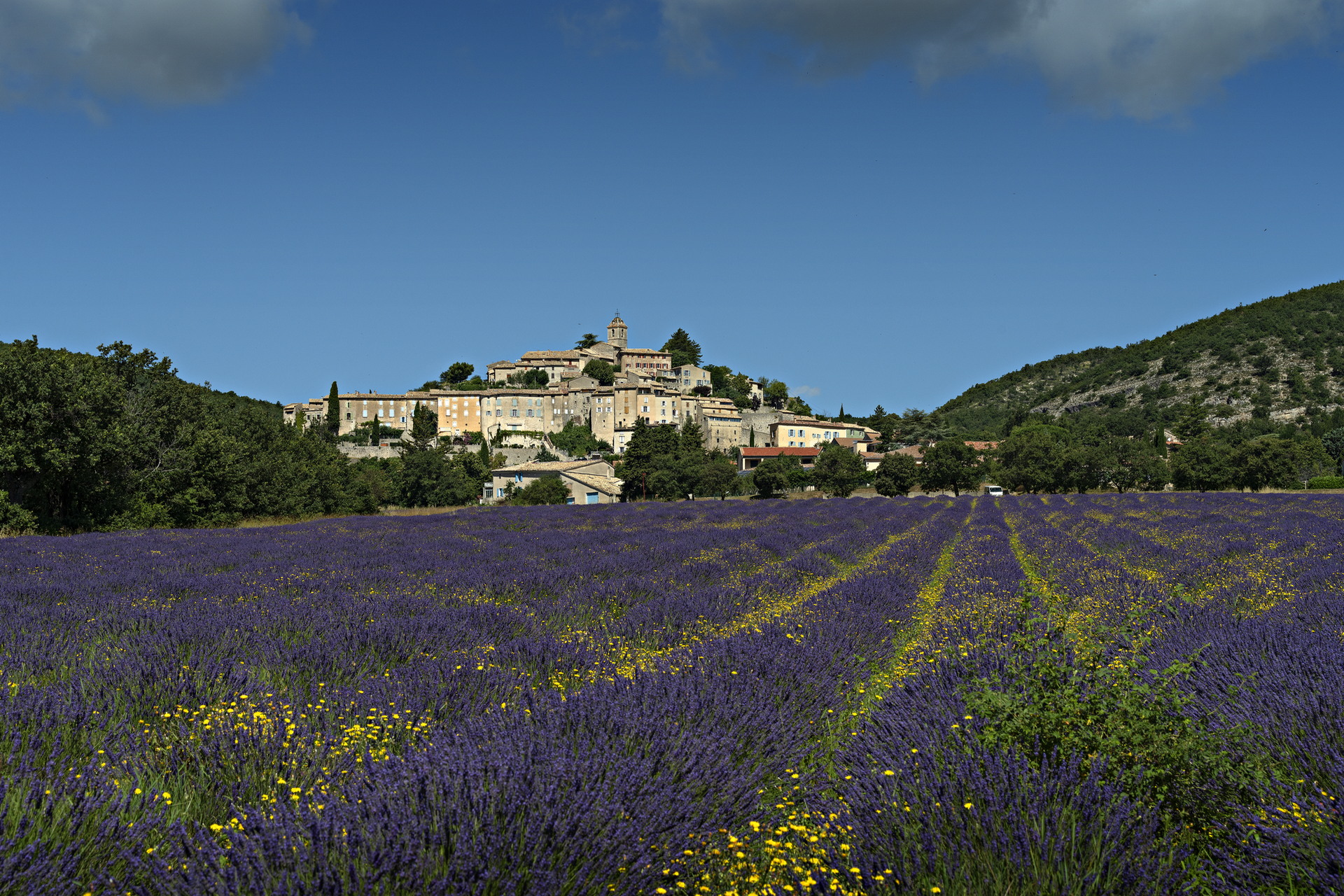
revest-du-bion

Numerous flint tools reveal that humans roamed its vast forests as far back as prehistoric times.
The first written record of Revest dates from 1080. The village name, as it first appears in 1272 (de Revesto Albioni), derives from the Occitan revèst, a variant of revers, designating a north-facing site.
Several archaeological excavations have uncovered Gallo-Roman settlements. In 1546, to guard against potential attacks from the Baronnies region, Consuls Maurel and Michel ordered the village fortified.
Perched at 960 meters altitude on the Albion plateau, the village—like all communes on the plateau—hosted nuclear ballistic missile launch bases from 1971 to 1996. These sites were among the most secret and heavily guarded locations in France.
Revest-du-Bion falls within several protected designation areas, including two AOC (protected designation of origin) products—Haute-Provence lavender essential oil and Banon cheese—along with nineteen IGP (protected geographical indication) products. These IGP designations cover fourteen local wines from Alpes-de-Haute-Provence and the Mediterranean region (including white, red, rosé, sparkling, and early-release varieties), as well as five other regional specialties: petit épeautre wheat and its flour, Provence honey, Sisteron lamb, and Drôme poultry.


what to see
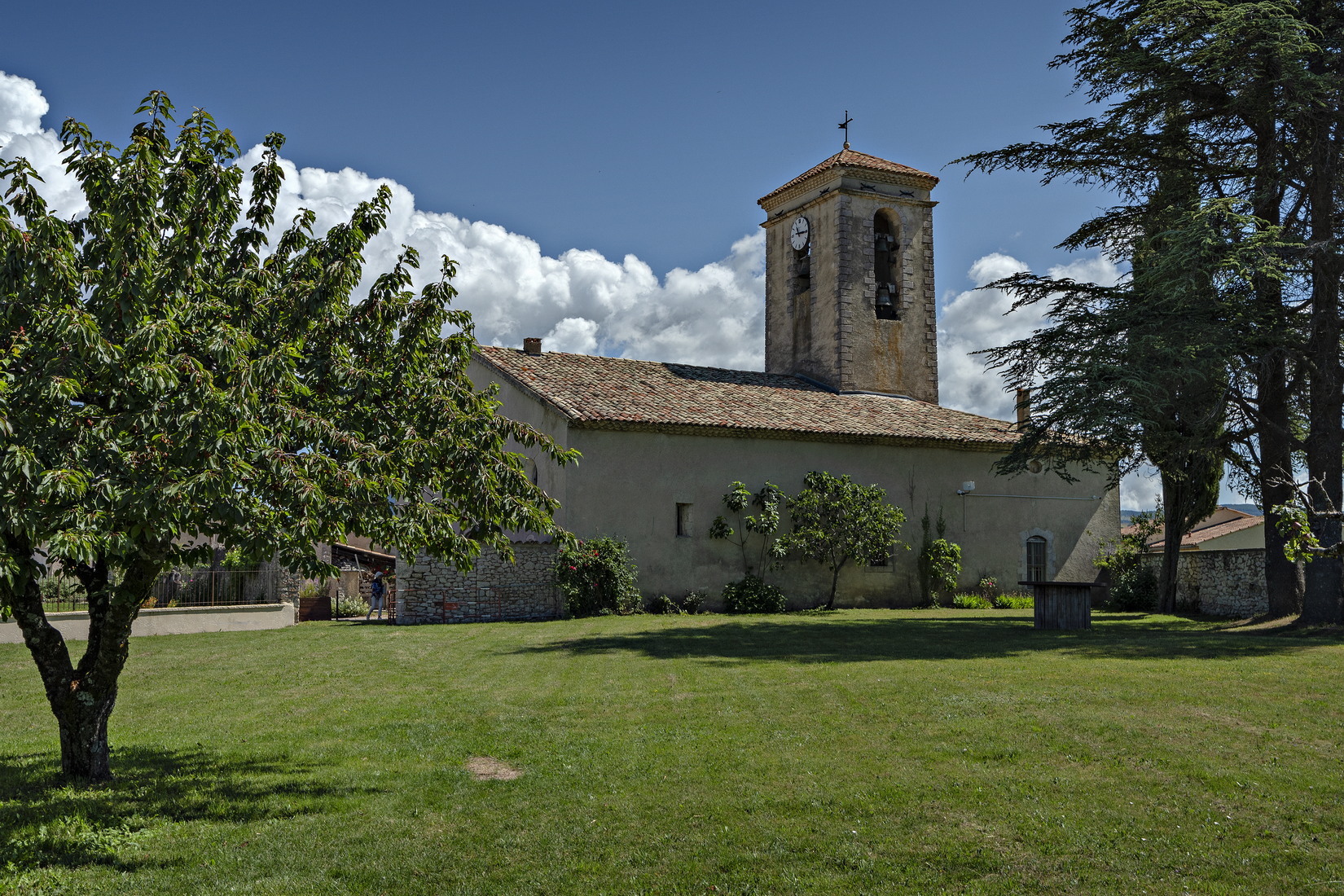
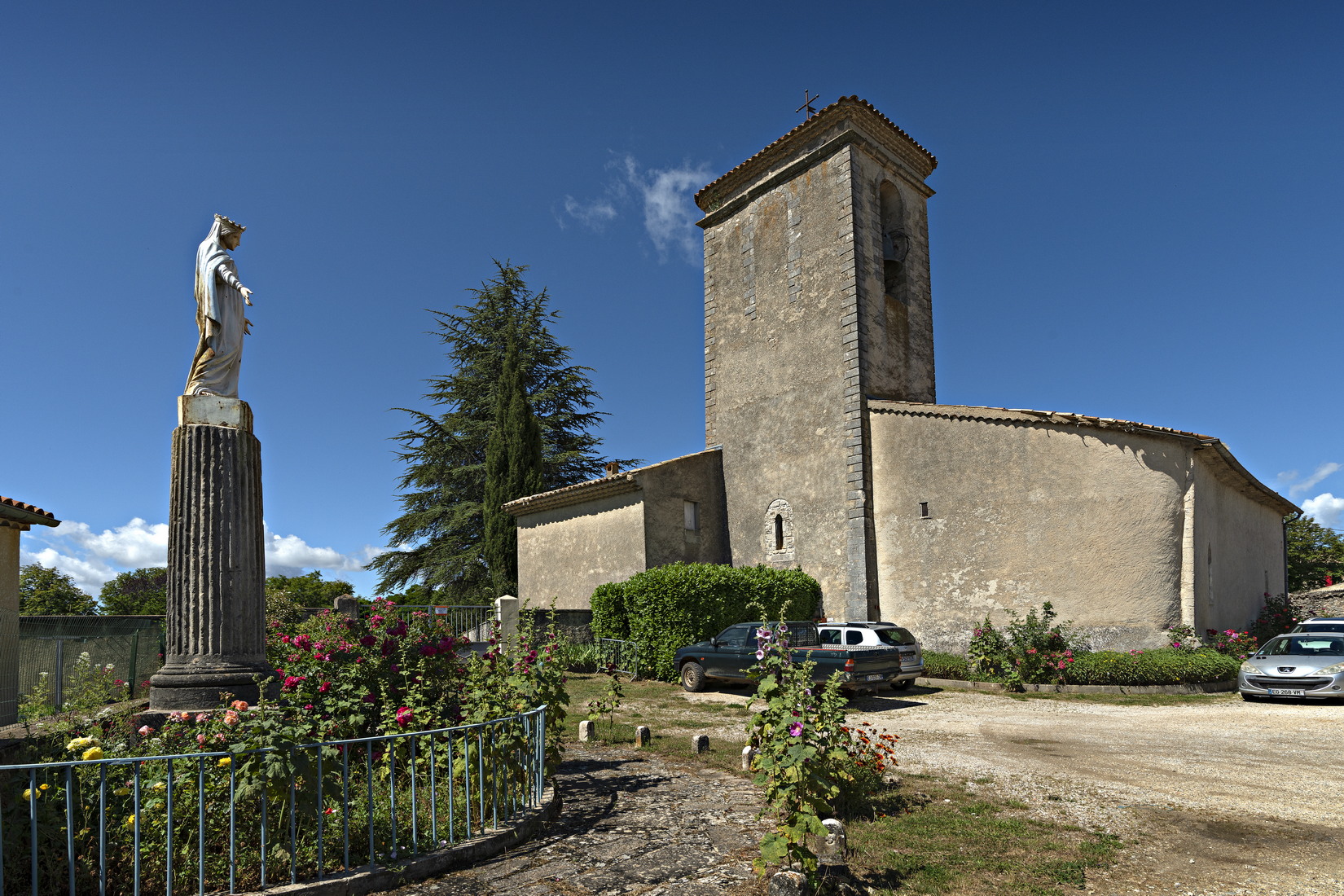
The Parish Church of Saint-Clair replaced the former priory church and retains very few Romanesque elements. Built in Gothic style, its nave features a steeply pointed barrel vault, while the flat-ended choir is rib-vaulted. The western portal features a rounded arch. The church dates from the late 15th to early 16th century. Side aisles were added in the 17th century, and the bell tower above the choir dates to 1675.
The Castle, located at the village center, dates from the 17th century, though its structure has been absorbed into surrounding houses. Only a circular corner tower remains intact. The village has preserved portions of the ramparts built in 1546, including two towers and the Portissol gateway.
A dovecote stands at L’Argaud. A wrought-iron cross, planted in the countryside, dates to 1840, and a fountain-washhouse inside the village was built in the early 20th century.
Notre-Dame-de-l’Ortiguière:
The Chapel of Notre-Dame-de-l’Ortiguière, standing alone on the plateau, was built in the 12th century.
Today, a communal holiday cottage (gîte) for up to six guests stands adjacent to the chapel. A lovely green space for picnicking is also available.
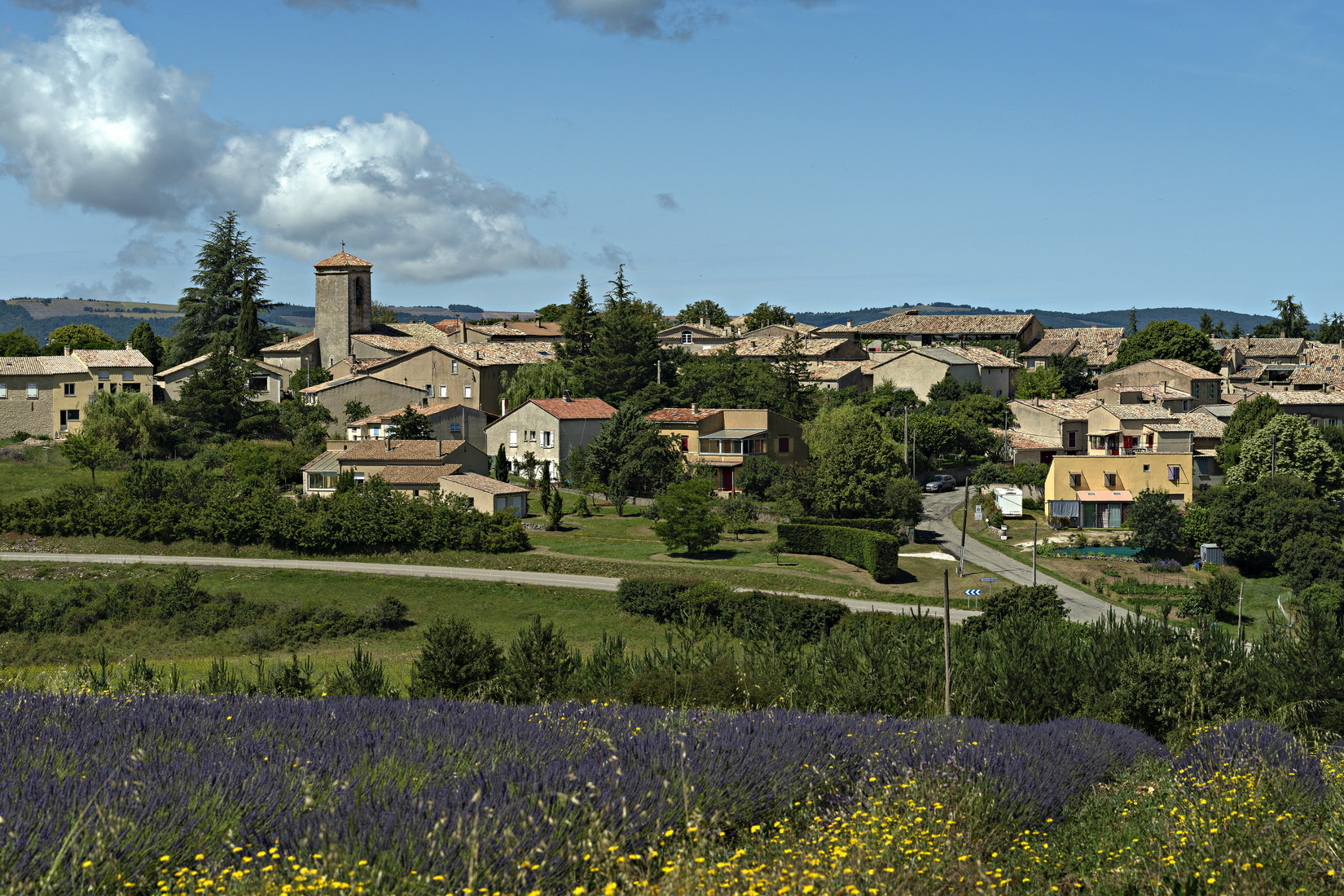
The village displays various forms of traditional Provençal housing: perched village homes where humans and animals once lived under the same roof, as well as isolated houses scattered across the hills.
Natural Spaces
The pond, west of the village, was converted into a picnic area several decades ago.
Annual Events
The Chestnut Festival, held on the last Sunday of October, has been hugely popular for years and draws numerous visitors.
Notable Figures
Eugène Martel (1869–1947)
A native of Revest-du-Bion, Eugène Martel entered the École des Beaux-Arts in Paris in 1892 to study under Gustave Moreau. In 1898, he returned permanently to his “beloved” native village, leaving only rarely to participate in salons and exhibitions (especially before 1914) or to visit family. He maintained correspondence with fellow painters including Matisse, Rouault, Marquet, Bréal, Milcendeau, and Bussy. From the 1930s onward, he also formed a friendship with Jean Giono.
Pierre Martel (1923–2001)
Born in Revest-du-Bion, Pierre Martel was a writer, researcher, and founder of the Alpes de Lumière association, dedicated to studying, preserving, and promoting the built, natural, and cultural heritage of Haute-Provence.
Writer Jean Giono made this village the home of the Jason brothers in his 1965 novel Les Deux cavaliers de l’orage (The Two Riders of the Storm).

outdoor
activities
Cycling routes
crafts
altitude
area
Accueil » Authentic Haute-Provence – Revest-du-Bion
our villages :
revest-du-bion
Numerous flint tools reveal that humans roamed its vast forests as far back as prehistoric times.
The first written record of Revest dates from 1080. The village name, as it first appears in 1272 (de Revesto Albioni), derives from the Occitan revèst, a variant of revers, designating a north-facing site.
Several archaeological excavations have uncovered Gallo-Roman settlements. In 1546, to guard against potential attacks from the Baronnies region, Consuls Maurel and Michel ordered the village fortified.
Perched at 960 meters altitude on the Albion plateau, the village—like all communes on the plateau—hosted nuclear ballistic missile launch bases from 1971 to 1996. These sites were among the most secret and heavily guarded locations in France.
Revest-du-Bion falls within several protected designation areas, including two AOC (protected designation of origin) products—Haute-Provence lavender essential oil and Banon cheese—along with nineteen IGP (protected geographical indication) products. These IGP designations cover fourteen local wines from Alpes-de-Haute-Provence and the Mediterranean region (including white, red, rosé, sparkling, and early-release varieties), as well as five other regional specialties: petit épeautre wheat and its flour, Provence honey, Sisteron lamb, and Drôme poultry.
what to see
The Parish Church of Saint-Clair replaced the former priory church and retains very few Romanesque elements. Built in Gothic style, its nave features a steeply pointed barrel vault, while the flat-ended choir is rib-vaulted. The western portal features a rounded arch. The church dates from the late 15th to early 16th century. Side aisles were added in the 17th century, and the bell tower above the choir dates to 1675.
The Castle, located at the village center, dates from the 17th century, though its structure has been absorbed into surrounding houses. Only a circular corner tower remains intact. The village has preserved portions of the ramparts built in 1546, including two towers and the Portissol gateway.
A dovecote stands at L’Argaud. A wrought-iron cross, planted in the countryside, dates to 1840, and a fountain-washhouse inside the village was built in the early 20th century.
Notre-Dame-de-l’Ortiguière:
The Chapel of Notre-Dame-de-l’Ortiguière, standing alone on the plateau, was built in the 12th century.
Today, a communal holiday cottage (gîte) for up to six guests stands adjacent to the chapel. A lovely green space for picnicking is also available.
The village displays various forms of traditional Provençal housing: perched village homes where humans and animals once lived under the same roof, as well as isolated houses scattered across the hills.
Natural Spaces
The pond, west of the village, was converted into a picnic area several decades ago.
Annual Events
The Chestnut Festival, held on the last Sunday of October, has been hugely popular for years and draws numerous visitors.
Notable Figures
Eugène Martel (1869–1947)
A native of Revest-du-Bion, Eugène Martel entered the École des Beaux-Arts in Paris in 1892 to study under Gustave Moreau. In 1898, he returned permanently to his “beloved” native village, leaving only rarely to participate in salons and exhibitions (especially before 1914) or to visit family. He maintained correspondence with fellow painters including Matisse, Rouault, Marquet, Bréal, Milcendeau, and Bussy. From the 1930s onward, he also formed a friendship with Jean Giono.
Pierre Martel (1923–2001)
Born in Revest-du-Bion, Pierre Martel was a writer, researcher, and founder of the Alpes de Lumière association, dedicated to studying, preserving, and promoting the built, natural, and cultural heritage of Haute-Provence.
Writer Jean Giono made this village the home of the Jason brothers in his 1965 novel Les Deux cavaliers de l’orage (The Two Riders of the Storm).
