
our villages :
La Rochegiron

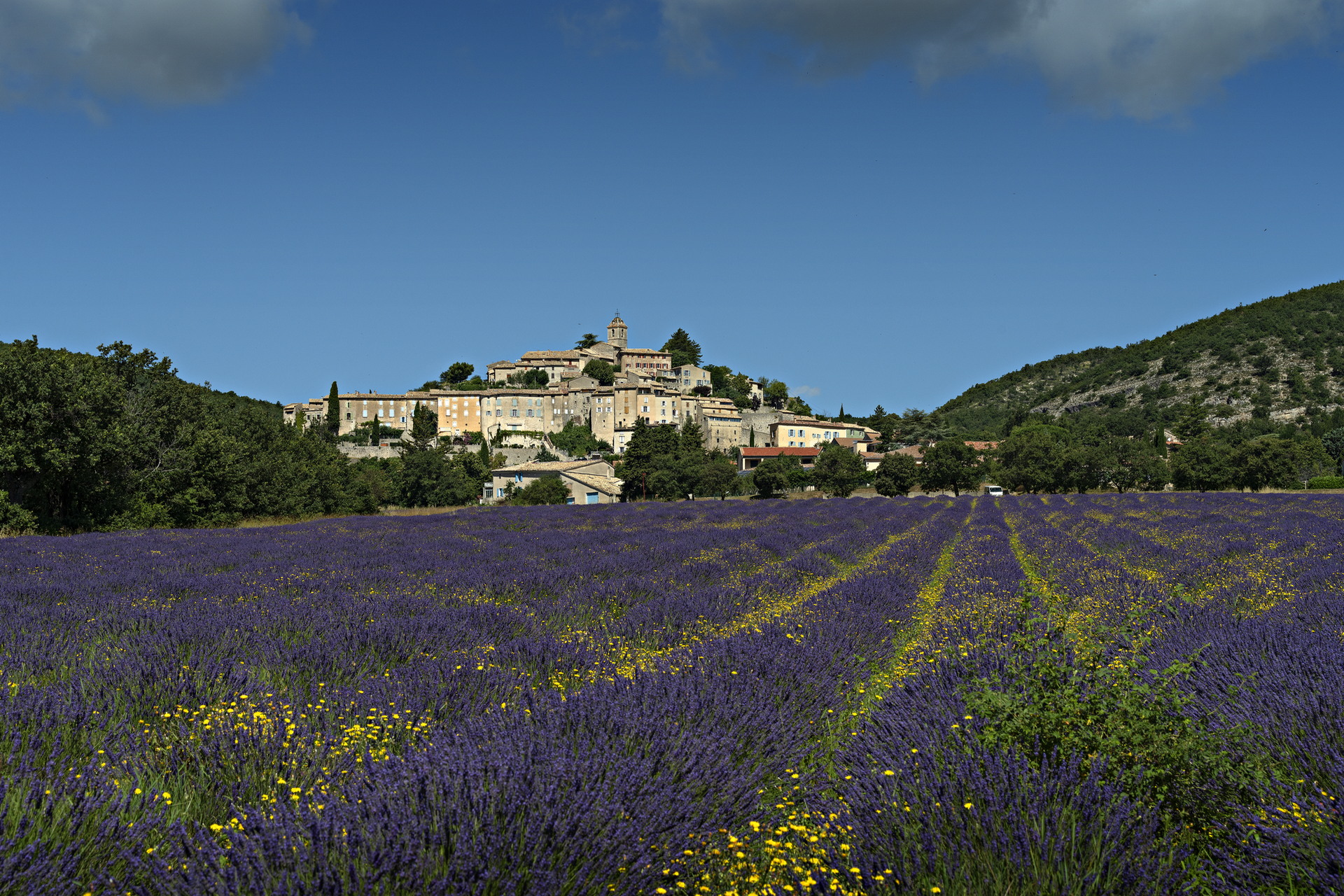
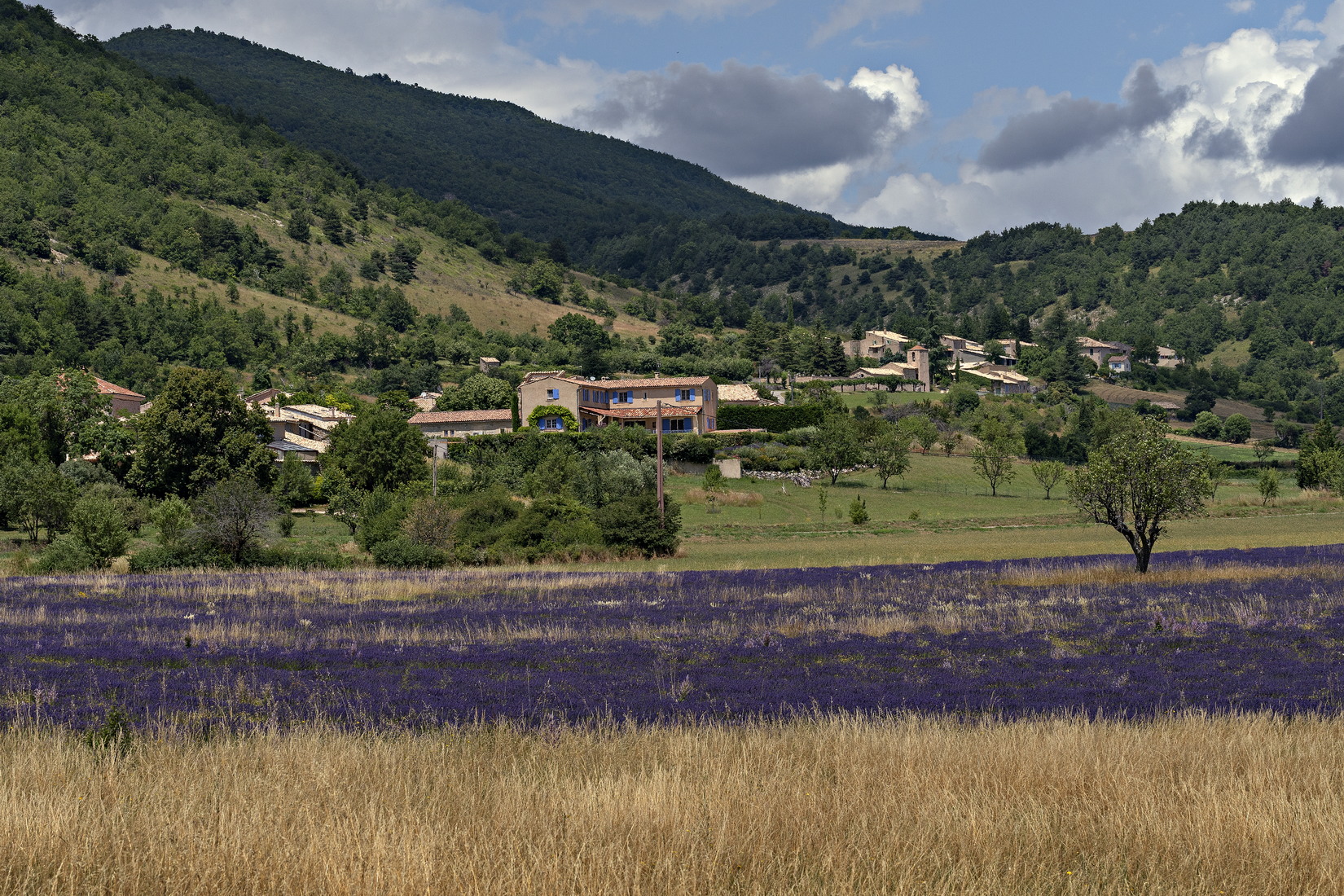
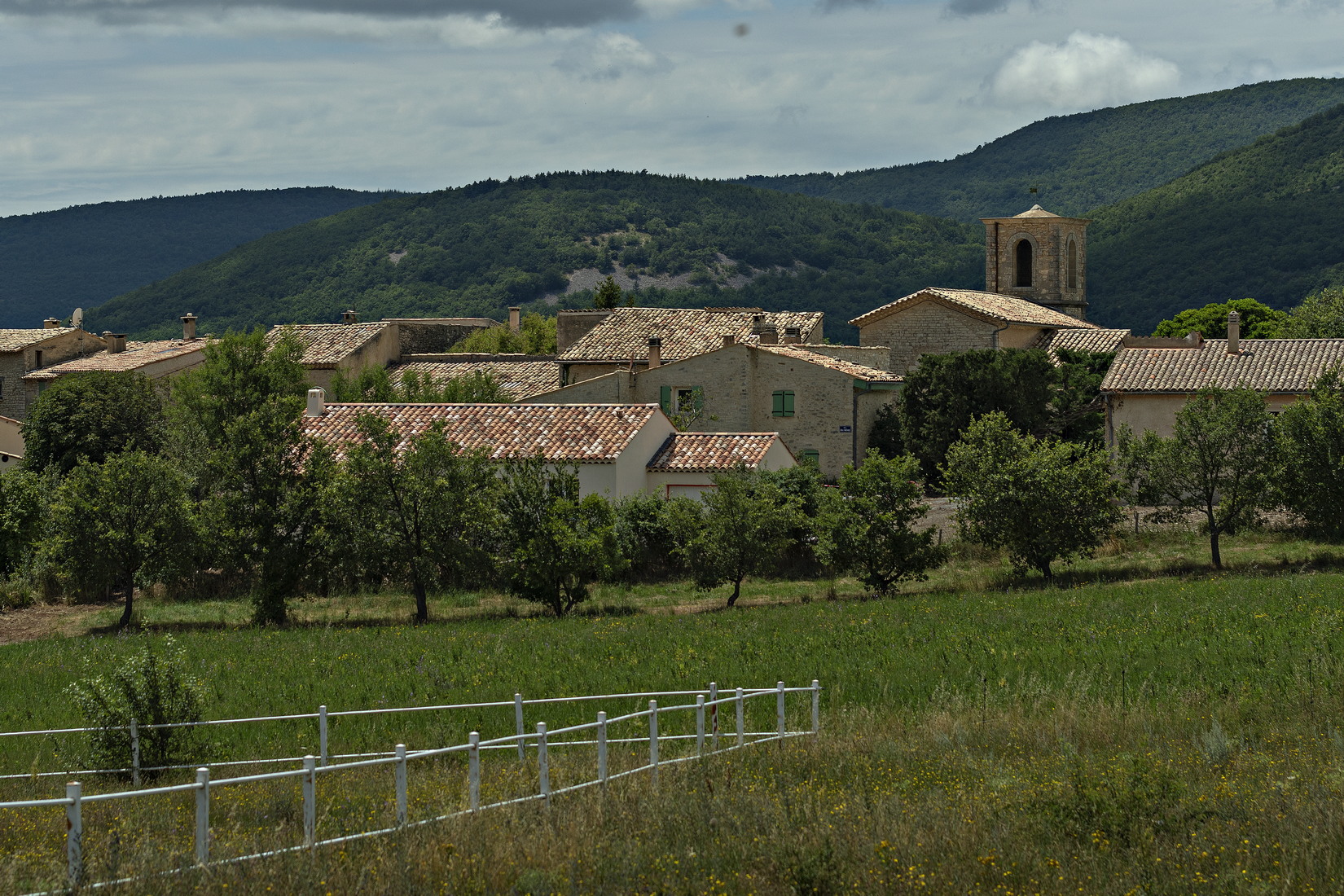
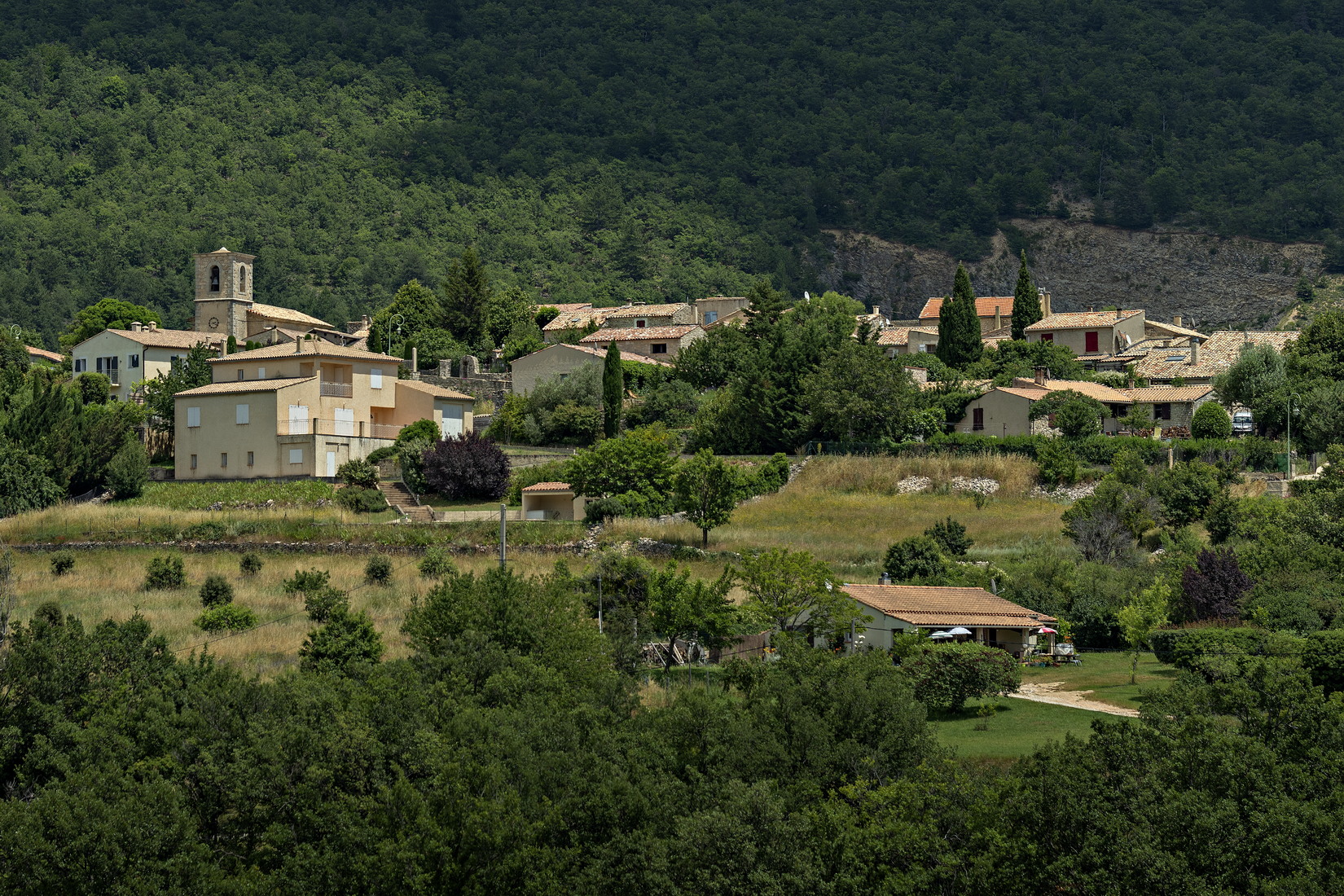
La Rochegiron is a charming village, quintessentially Provençal, nestled at the foot of Montagne de Lure.
The village comprises three hamlets: Le Jonquet, Saint Pancrace, and Vière (a former village that once served as a defensive site of La Rochegiron).
The village name first appears in 1274 as Rochagiron, derived from the Occitan rocha (fortress) and the personal name Giron. A Gallo-Roman oppidum known as the Camp des Maures can be found in the area. Until the mid-20th century, vines were grown in La Rochegiron, with the wine produced strictly for local consumption. This tradition has since disappeared, as has olive cultivation—another emblematic crop grown on small plots in the 19th century at altitudes of up to 600 meters, exceptionally reaching 700 meters.
Today, lavandin fields now blanket the landscape. At the heart of the village stands a 19th-century distillery, recently renovated and reopened in June 2024.
The long-distance hiking trails (GR routes) that begin in the village lead past several dry stone shepherds’ huts, including the ruins at Jas de Botte and Jas de Pérussier. Marked paths wind up into Montagne de Lure for exploration.
At the cemetery parking area, an information board displays the many hiking routes available throughout the region.


what to see
Church of Saint-Nom-de-Jésus in the hamlet of Le Jonquet was built by the local priest in the 18th century.
Be sure to visit the charming fountains and washhouses in Le Jonquet and at the village entrance.
The ruins of Vière village are an absolute must-see. This beautiful hike offers sweeping panoramic views and is celebrated for the annual summer concert held among the ancient stones.
Vière’s church dates from the late 12th century and underwent modifications in 1559. Today, the flat-ended apse, bell tower, and part of the southern wall still stand.
Throughout the village, you’ll find numerous dovecotes, some now converted into charming guest rooms.
A Notable Connection: Until his death in 2015, philosopher Marc Richir hosted the annual summer conference of the Association des Amis de la Phénoménologie at his home here.

outdoor
activities
crafts
altitude
area
Accueil » Authentic Haute-Provence – La Rochegiron
our villages :
La Rochegiron
La Rochegiron is a charming village, quintessentially Provençal, nestled at the foot of Montagne de Lure.
The village comprises three hamlets: Le Jonquet, Saint Pancrace, and Vière (a former village that once served as a defensive site of La Rochegiron).
The village name first appears in 1274 as Rochagiron, derived from the Occitan rocha (fortress) and the personal name Giron. A Gallo-Roman oppidum known as the Camp des Maures can be found in the area. Until the mid-20th century, vines were grown in La Rochegiron, with the wine produced strictly for local consumption. This tradition has since disappeared, as has olive cultivation—another emblematic crop grown on small plots in the 19th century at altitudes of up to 600 meters, exceptionally reaching 700 meters.
Today, lavandin fields now blanket the landscape. At the heart of the village stands a 19th-century distillery, recently renovated and reopened in June 2024.
The long-distance hiking trails (GR routes) that begin in the village lead past several dry stone shepherds’ huts, including the ruins at Jas de Botte and Jas de Pérussier. Marked paths wind up into Montagne de Lure for exploration.
At the cemetery parking area, an information board displays the many hiking routes available throughout the region.
what to see
Church of Saint-Nom-de-Jésus in the hamlet of Le Jonquet was built by the local priest in the 18th century.
Be sure to visit the charming fountains and washhouses in Le Jonquet and at the village entrance.
The ruins of Vière village are an absolute must-see. This beautiful hike offers sweeping panoramic views and is celebrated for the annual summer concert held among the ancient stones.
Vière’s church dates from the late 12th century and underwent modifications in 1559. Today, the flat-ended apse, bell tower, and part of the southern wall still stand.
Throughout the village, you’ll find numerous dovecotes, some now converted into charming guest rooms.
A Notable Connection: Until his death in 2015, philosopher Marc Richir hosted the annual summer conference of the Association des Amis de la Phénoménologie at his home here.
