Accueil » Authentic Haute-Provence – Dauphin
our villages :
Dauphin
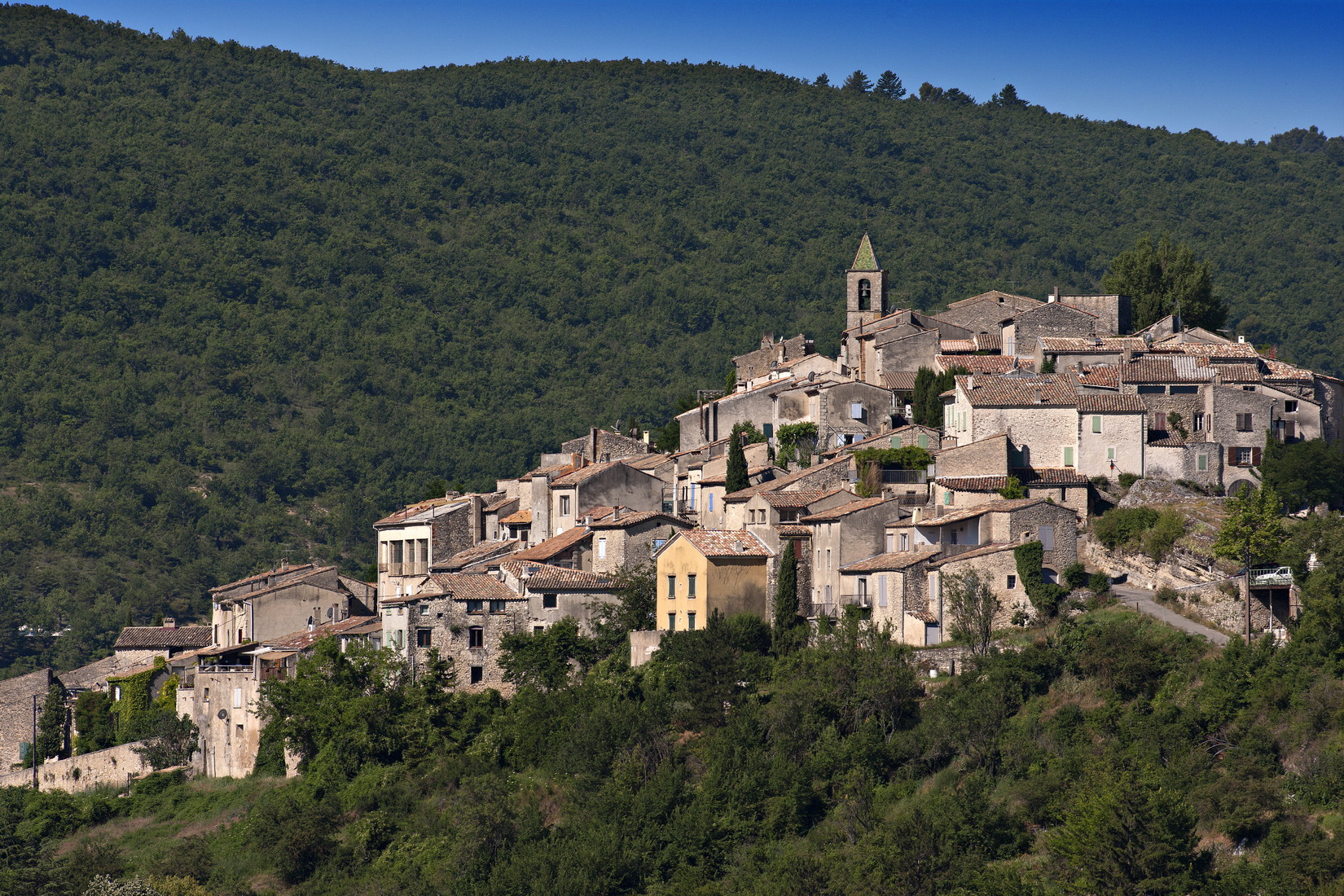
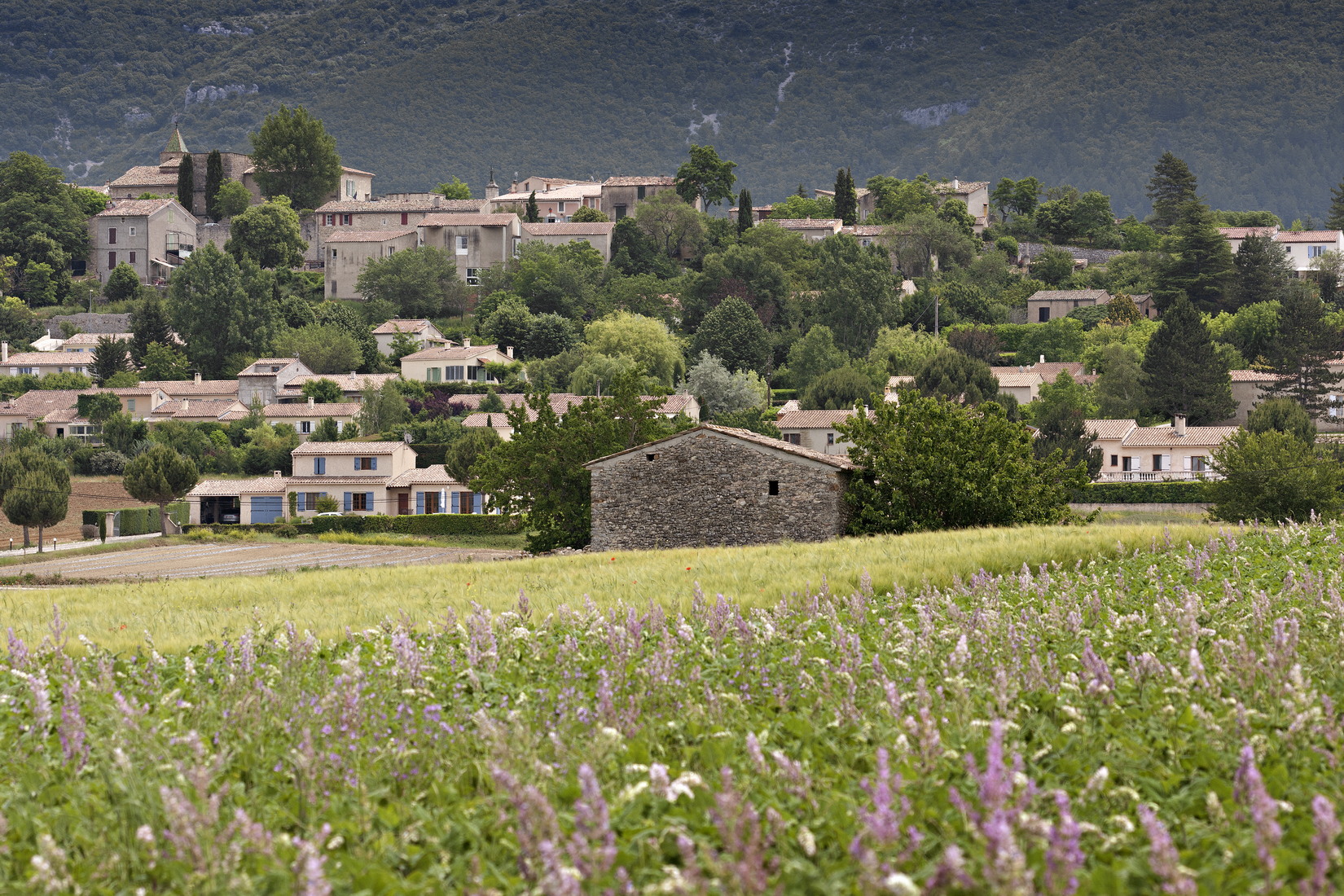
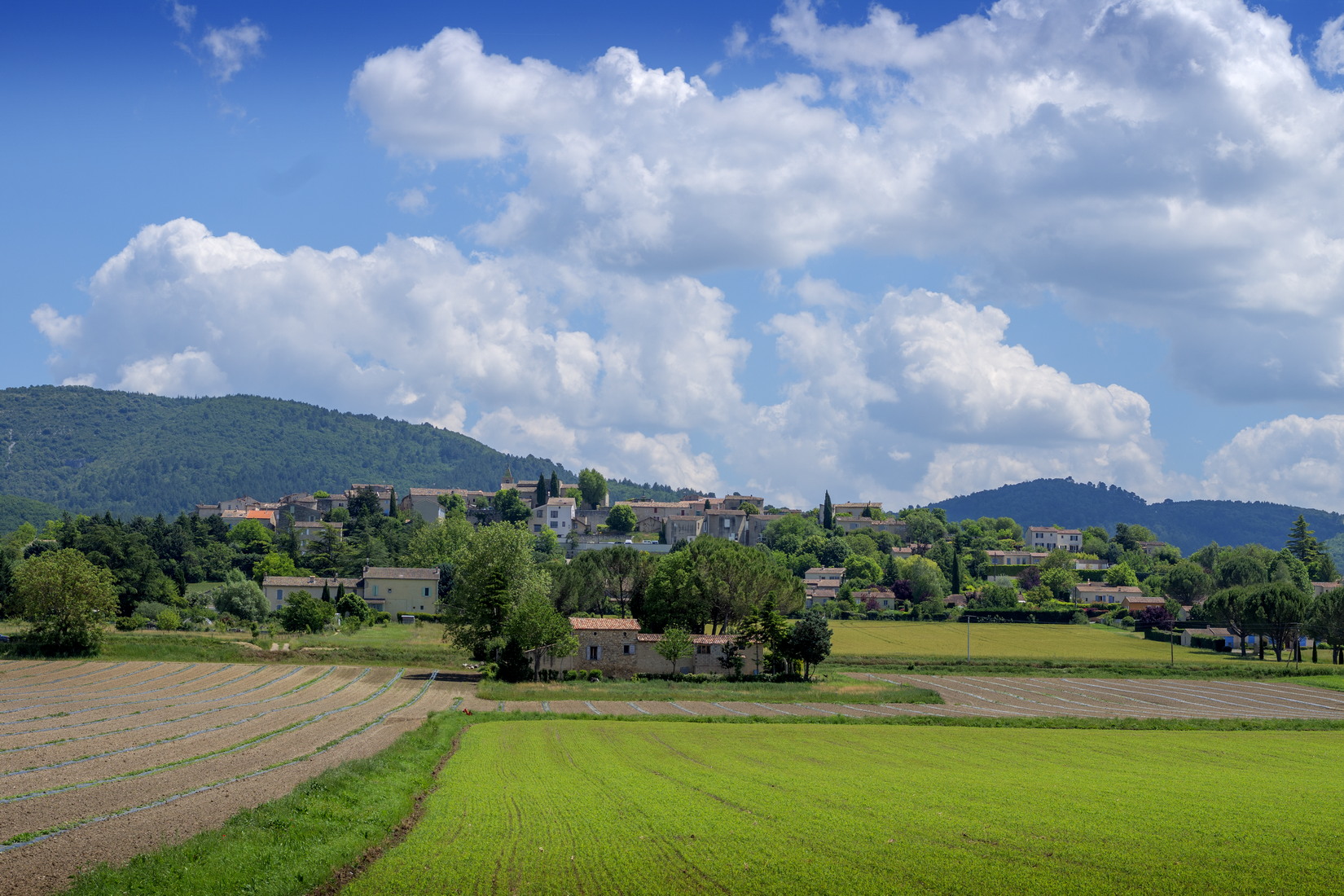
Dauphin stands as one of Haute Provence’s most beautiful perched villages, its stone architecture set against a backdrop of wooded hills. Built atop a rocky outcrop, it offers breathtaking panoramic views. To the south stretch the Luberon mountains; to the north, views sweep across fertile plains to the distinctive domes of Saint-Michel-l’Observatoire. The plain stretching below, crossed by the Largue and Laye rivers, is steeped in history—traversed by the Via Domitia, the ancient Roman road linking Spain to Italy. The Chemin Seynet, which follows part of its route, marks the village’s northern boundary.
The early village likely stood at the foot of the present settlement, at a site certainly occupied since Roman times, situated between today’s village and the Via Domitia. This is where the Priory of Chamberlay once stood, though the origin of its name remains uncertain. An engraved plaque on the cemetery wall marks the former presence of the Notre-Dame de Chamberlay priory, erected in the 12th century. The old parish church was demolished in 1895 to allow for the cemetery’s expansion.
Dauphin was part of the County of Forcalquier, established in the 11th century and encompassing the eastern territory north of the Durance River.
Dauphin was established as a fief in 1125 and granted in 1133 by the Count of Forcalquier to Guigues IV d’Albon, known as Guigues-Dolfin or Guigues Dauphin (who died in 1142). He is believed to be the village’s eponymous lord.
what to see
The Castle: Though altered and fragmented over time, the castle’s construction dates back to the 12th century. Its 16th-century ceremonial gateway still stands, leading to a welcoming flower-filled space shared by a few houses, the town hall, a garden esplanade, a viewing terrace, and the church.
The castle survives in transformed fragments: the main residence now houses the town hall; the base of a corner tower with gun ports and typical Renaissance stonework has been incorporated into the northwest section of the church; and the keep, lowered in height, has been converted into a belvedere terrace crowned by a large bronze statue of the Virgin Mary, placed there in 1865.
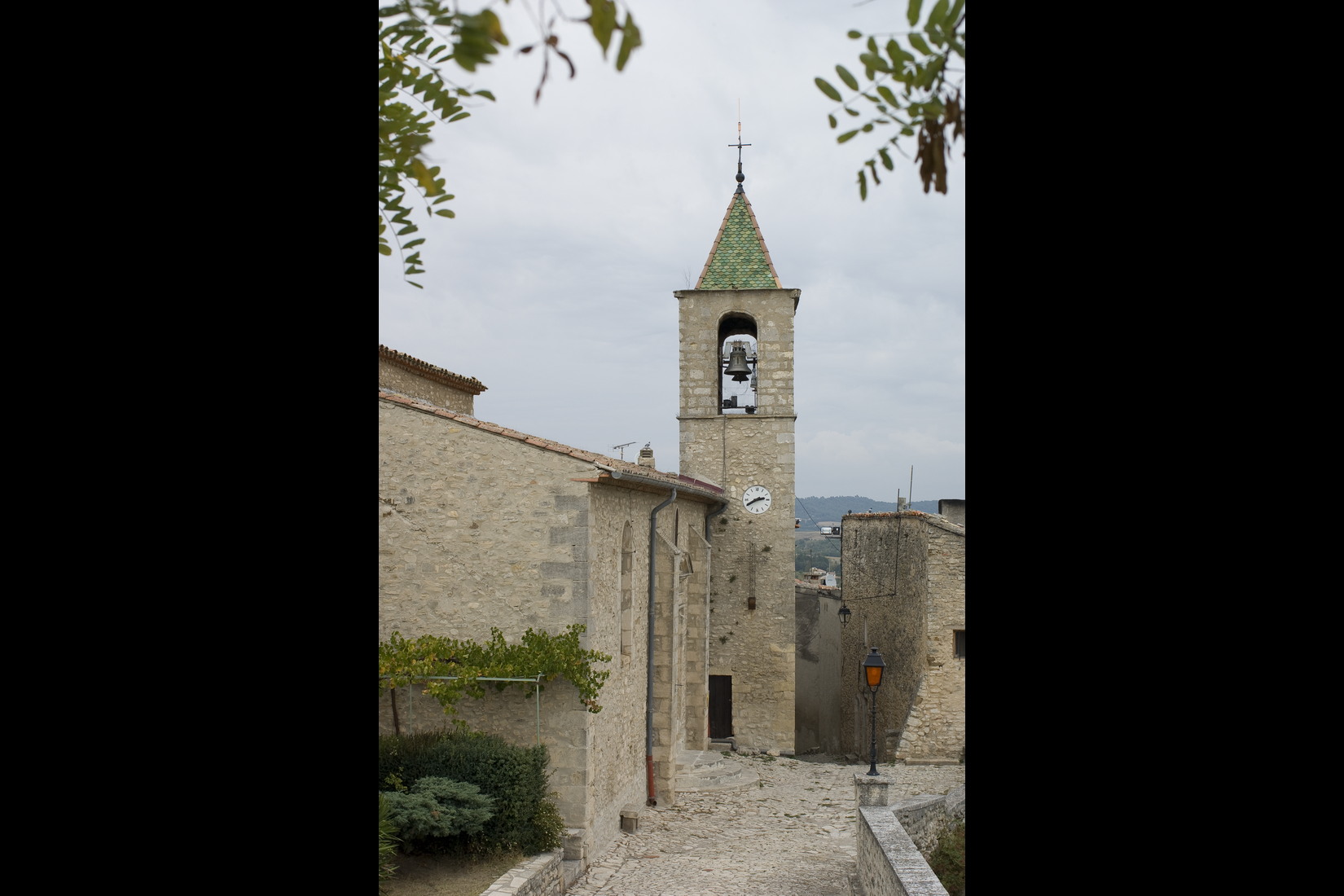
Church of Saint-Martin: The church began as the seigneurial chapel of Saint Patrice in the 12th century. In 1524, it was given to the village to serve as the parish church, at which time the Gothic choir and southern side aisle were added. It received its bell tower in 1750 and incorporated a square tower from the castle in 1836.
With its beautiful Renaissance porch and glazed-tile bell tower, the interior holds a small masterpiece: a ribbed vault.
Cemetery and Lantern of the Dead
The village has restored its historic lantern of the dead, originally built into the enclosure wall and rediscovered by chance in 1907 by archaeologist Henri Rolland. Reconstructed in 1982, it now stands within the cemetery grounds. This small “oratory” near the gate features two carved cavities—one for votive candles, the other for holy water.
Notre-Dame d’Hubages: A chapel dedicated to Our Lady of Solitude, situated along a small north-facing road (ubac)—hence the name Hubages. Though quite distant from Dauphin, it was erected in 1619 (on a very ancient place of worship) and enlarged in 1669. For more than two centuries, it was the object of pilgrimages where worshippers came to ask its miraculous Virgin to bring rain, make the crops fertile, and protect those who worked in the mines.
The Mines: Buildings from the old Biabaux sulfur mine, now a vacation center.
The former railway line and its old crossing keeper’s cottages.
outdoor
activities
crafts
altitude
area
Accueil » Authentic Haute-Provence – Dauphin
our villages :
Dauphin
Dauphin stands as one of Haute Provence’s most beautiful perched villages, its stone architecture set against a backdrop of wooded hills. Built atop a rocky outcrop, it offers breathtaking panoramic views. To the south stretch the Luberon mountains; to the north, views sweep across fertile plains to the distinctive domes of Saint-Michel-l’Observatoire. The plain stretching below, crossed by the Largue and Laye rivers, is steeped in history—traversed by the Via Domitia, the ancient Roman road linking Spain to Italy. The Chemin Seynet, which follows part of its route, marks the village’s northern boundary.
The early village likely stood at the foot of the present settlement, at a site certainly occupied since Roman times, situated between today’s village and the Via Domitia. This is where the Priory of Chamberlay once stood, though the origin of its name remains uncertain. An engraved plaque on the cemetery wall marks the former presence of the Notre-Dame de Chamberlay priory, erected in the 12th century. The old parish church was demolished in 1895 to allow for the cemetery’s expansion.
Dauphin was part of the County of Forcalquier, established in the 11th century and encompassing the eastern territory north of the Durance River.
Dauphin was established as a fief in 1125 and granted in 1133 by the Count of Forcalquier to Guigues IV d’Albon, known as Guigues-Dolfin or Guigues Dauphin (who died in 1142). He is believed to be the village’s eponymous lord.
what to see
The Castle: Though altered and fragmented over time, the castle’s construction dates back to the 12th century. Its 16th-century ceremonial gateway still stands, leading to a welcoming flower-filled space shared by a few houses, the town hall, a garden esplanade, a viewing terrace, and the church.
The castle survives in transformed fragments: the main residence now houses the town hall; the base of a corner tower with gun ports and typical Renaissance stonework has been incorporated into the northwest section of the church; and the keep, lowered in height, has been converted into a belvedere terrace crowned by a large bronze statue of the Virgin Mary, placed there in 1865.
Church of Saint-Martin: The church began as the seigneurial chapel of Saint Patrice in the 12th century. In 1524, it was given to the village to serve as the parish church, at which time the Gothic choir and southern side aisle were added. It received its bell tower in 1750 and incorporated a square tower from the castle in 1836.
With its beautiful Renaissance porch and glazed-tile bell tower, the interior holds a small masterpiece: a ribbed vault.
Cemetery and Lantern of the Dead
The village has restored its historic lantern of the dead, originally built into the enclosure wall and rediscovered by chance in 1907 by archaeologist Henri Rolland. Reconstructed in 1982, it now stands within the cemetery grounds. This small “oratory” near the gate features two carved cavities—one for votive candles, the other for holy water.
Notre-Dame d’Hubages: A chapel dedicated to Our Lady of Solitude, situated along a small north-facing road (ubac)—hence the name Hubages. Though quite distant from Dauphin, it was erected in 1619 (on a very ancient place of worship) and enlarged in 1669. For more than two centuries, it was the object of pilgrimages where worshippers came to ask its miraculous Virgin to bring rain, make the crops fertile, and protect those who worked in the mines.
The Mines: Buildings from the old Biabaux sulfur mine, now a vacation center.
The former railway line and its old crossing keeper’s cottages.