The village first appears in written records in 1050 under the name Monte Celeg.
Montsalier is a charming village that offers visitors a journey deep into history.
Montsalier’s story begins in the Middle Ages with the founding of Vieux Montsalier (Old Montsalier), perched on a rocky promontory for strategic defense. This elevated position provided natural protection against invasion along with commanding views of the surrounding area. Over the centuries, however, water supply challenges and economic shifts gradually drove residents down from the heights to settle in the valley, where present-day Montsalier now stands.
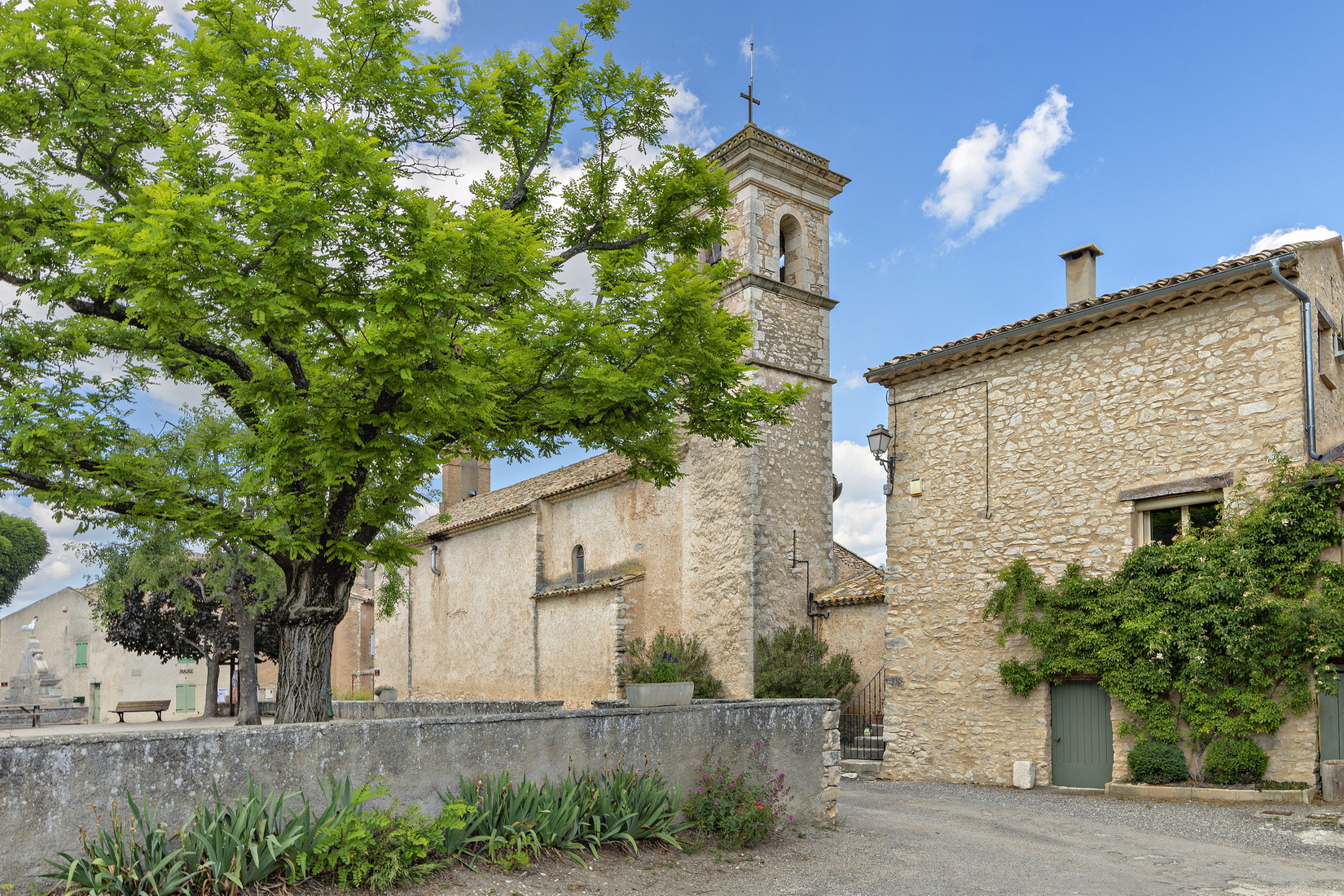
Set on a gentle slope at the foot of a wooded hill and surrounded by lavender fields and farmland, Montsalier invites peaceful exploration through its few narrow lanes, where stone houses display beautiful ochre-toned dry stone façades.
What to see
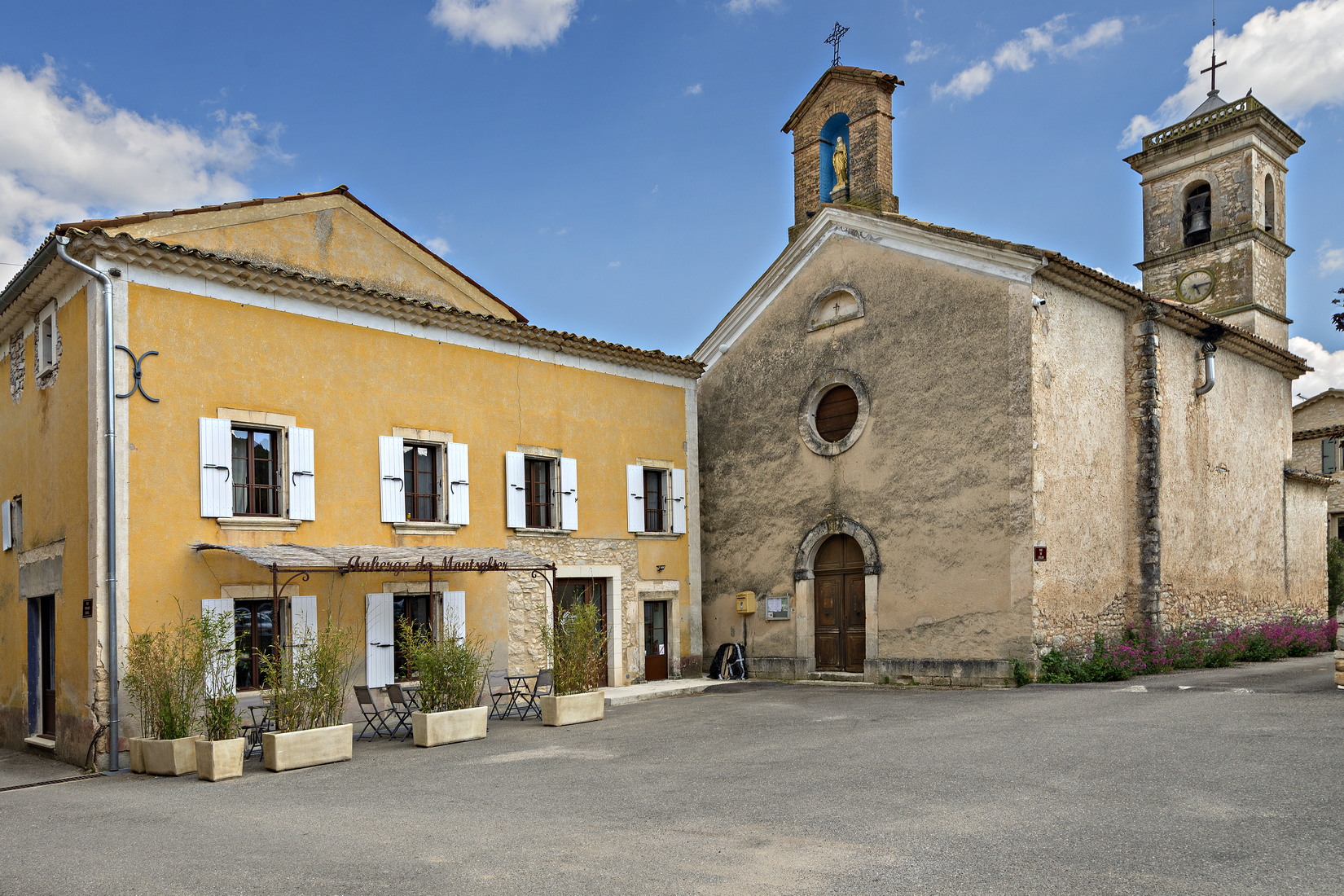
The Church of Notre-Dame au Plan is the village’s parish church.
The authentic Bastide du Baou, flanked by two round towers converted into dovecotes, stands on the site of a former Gallo-Roman settlement, later succeeded by the Church of Notre-Dame de la Ferronnade—both now lost to history.
Vieux Montsalier remains a remarkable testament to the medieval past, though access is now restricted for safety reasons.
The Church of Notre-Dame au Plan is the village’s parish church.
The authentic Bastide du Baou, flanked by two round towers converted into dovecotes, stands on the site of a former Gallo-Roman settlement, later succeeded by the Church of Notre-Dame de la Ferronnade—both now lost to history.
Vieux Montsalier remains a remarkable testament to the medieval past, though access is now restricted for safety reasons.
L’église Notre-Dame au Plan, actuelle église paroissiale.
Une authentique bastide, la bastide du Baou, encadrée de deux tours rondes converties en pigeonniers, se trouve à Montsalier. Elle est construite à l’emplacement d’un établissement gallo-romain auquel a succédé l’église Notre-Dame de la Ferronnade, tous deux disparus.
Le vieux Montsalier reste un témoignage remarquable du passé médiéval, mais aujourd’hui son accès est interdit pour des raisons de sécurité.