



Accueil » Authentic Haute-Provence – Redortiers
our villages :
REDORTIERS

Redortiers takes its name from redorte, which in Provençal Occitan refers to flexible-branched shrubs once used to bind bundles of firewood.
During the era of the Lord of Redortiers, peasants lived off their livestock and wood was freely available for use.
The village prospered before the Revolution, reaching a population of 500 in the 17th century.
But after the Revolution, everything changed. Residents lost access to their land and faced heavy taxes from the new landowners. Ruined by legal battles, they watched as the inn closed and the church collapsed. The decline was inexorable.
By 1880, the village had dwindled to a simple hamlet and was eventually abandoned altogether.
This is the story Jean Giono would later tell in Regain (Second Harvest), his novel about a dying Haute-Provence village he called Aubignane.
Redortiers is also a place where dry stone masonry reigns supreme
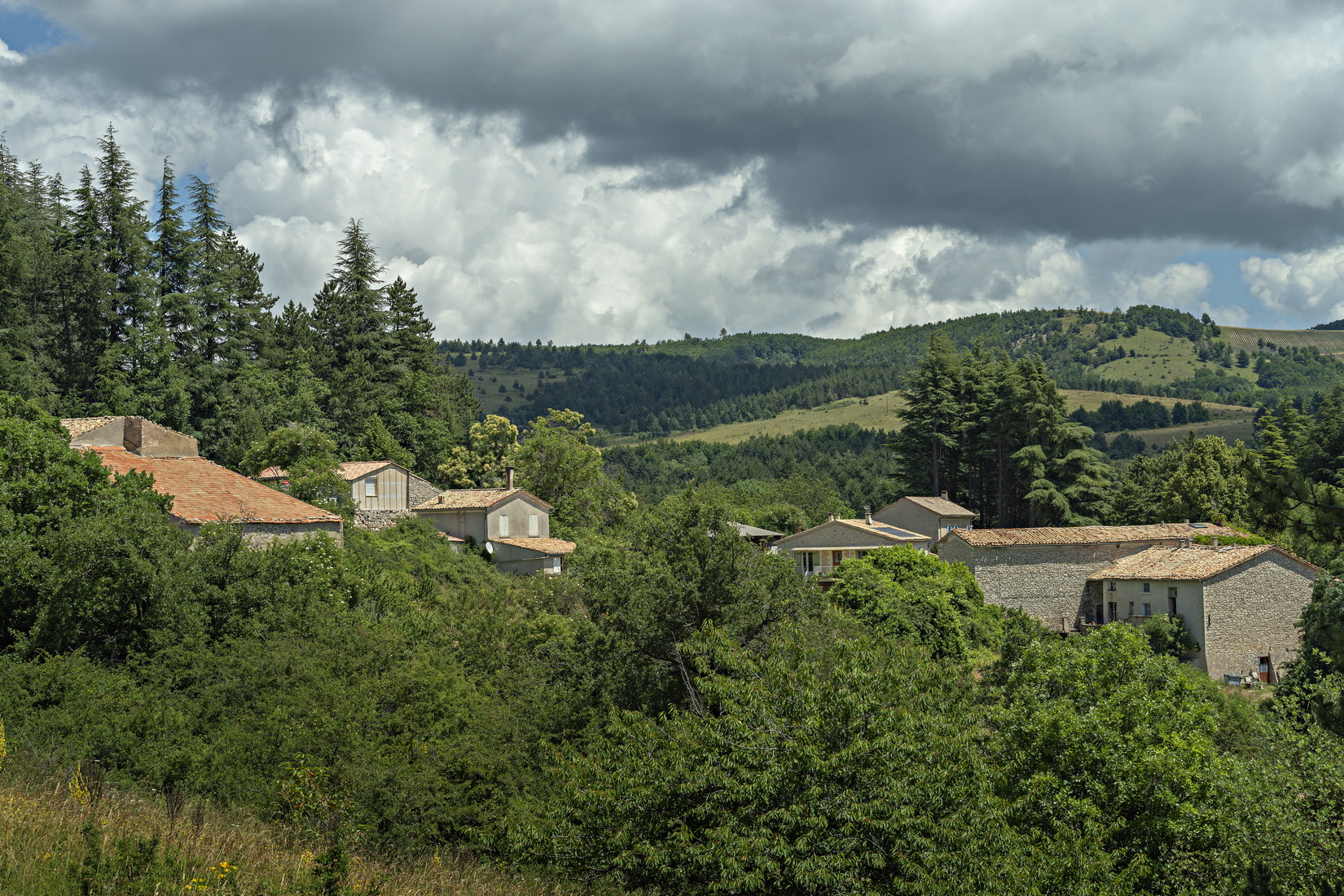
Arriving in this lovely village, you’ll be captivated by the surrounding landscape.
Situated between Mont Ventoux (the Albion plateau) and the Montagne de Lure, endless fields of lavender and clary sage stretch before you, framed by beautiful mountains in the distance.
A breath of pure mountain air amid stunning natural beauty awaits you in Redortiers!
The original village, known as Vieux Redortiers (Old Redortiers), now lies in ruins.
The path leading there reveals nature reclaiming its territory.
A narrow trail unfolds with incredible viewpoints, dry stone walls, and cobblestone streets (calades) restored by young volunteers in 2005.


what to see
Today, only a few ancient cobbled lanes remain visible, along with a threshing floor, terraced walls (restanques) that once supported gardens, crops, and orchards, the ruins of old bastides, the keep of a 12th-century watchtower, and several wells and cisterns that collected rainwater.
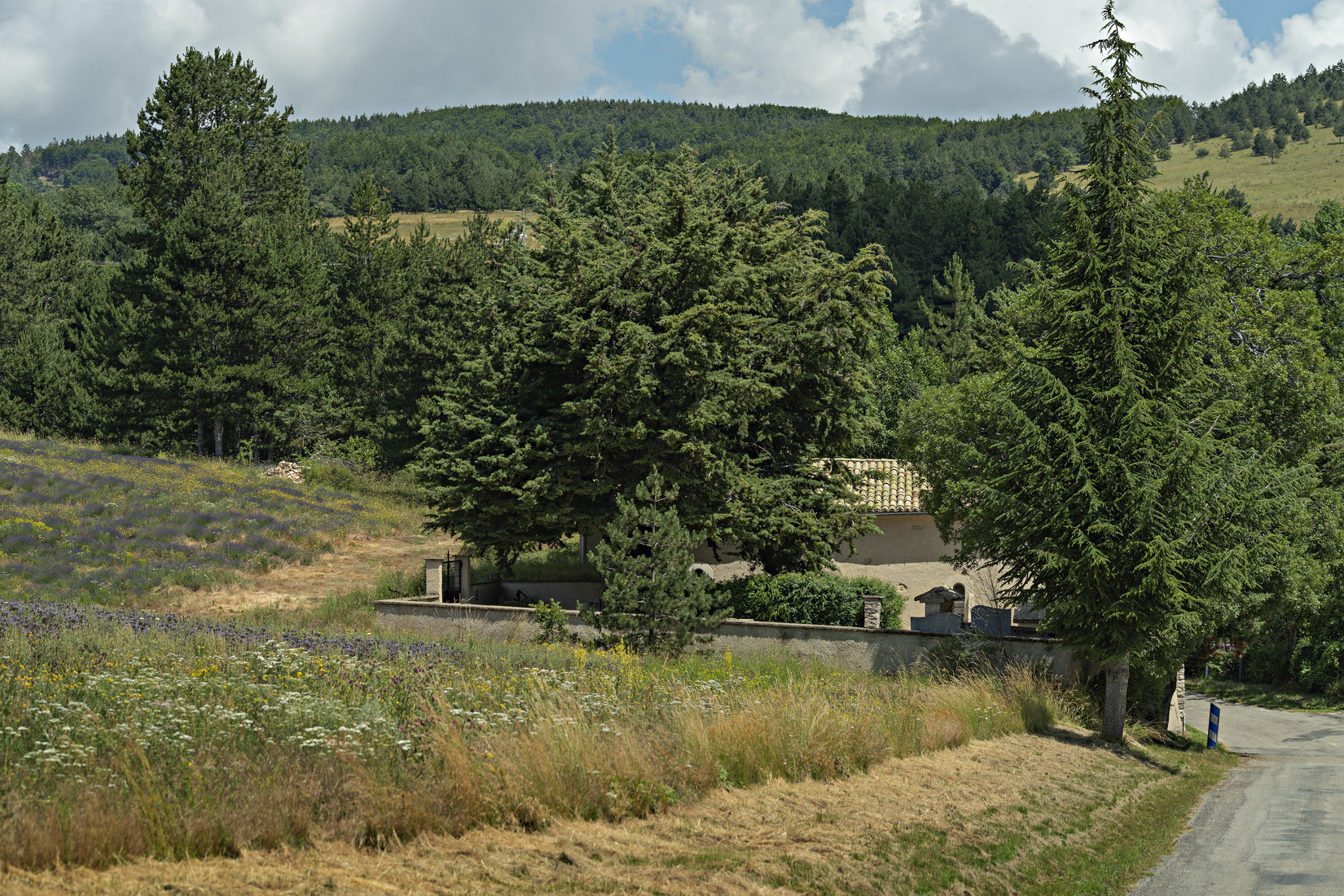
A bit farther on, you’ll find the cemetery surrounded by dry stone walls, with poignant gravestones bearing names still legible and dates of 1883 and 1918.
Near the cemetery, a barely traced zigzag path leads to the Fontaine de l’Oiseau—the old village washhouse, which still flows with water.
Located in the Vallon de la Croix, this beautifully restored washhouse is roofed with lauzes (stone slabs), like the local shepherds’ huts.
Redortiers is renowned as a significant site of the Resistance. A Chemin de la Résistance (Resistance Trail) marker stands here. (See the book: Les chemins de la liberté sur les pas des résistants de Haute-Provence, 2004.)
Like many surrounding villages, Vieux Redortiers emptied of residents around 1920. A young bank clerk from Manosque named Jean Giono fell in love with these abandoned villages slowly surrendering to nature during his walks through the region. He drew inspiration from Redortiers’ story (which he renamed “Aubignane”) for his novel Regain (published in English as Second Harvest). Between 1935 and 1939, the now-famous Giono and his friend Lucien Jacques hosted the Rencontres du Contadour—gatherings of an intellectual circle captivated by the beauty of the place—at the Ferme des Graves.
Giono would go on to make a film with Fernandel called Crésus.
Marcel Pagnol adapted Giono’s novel Regain into a film in 1937.
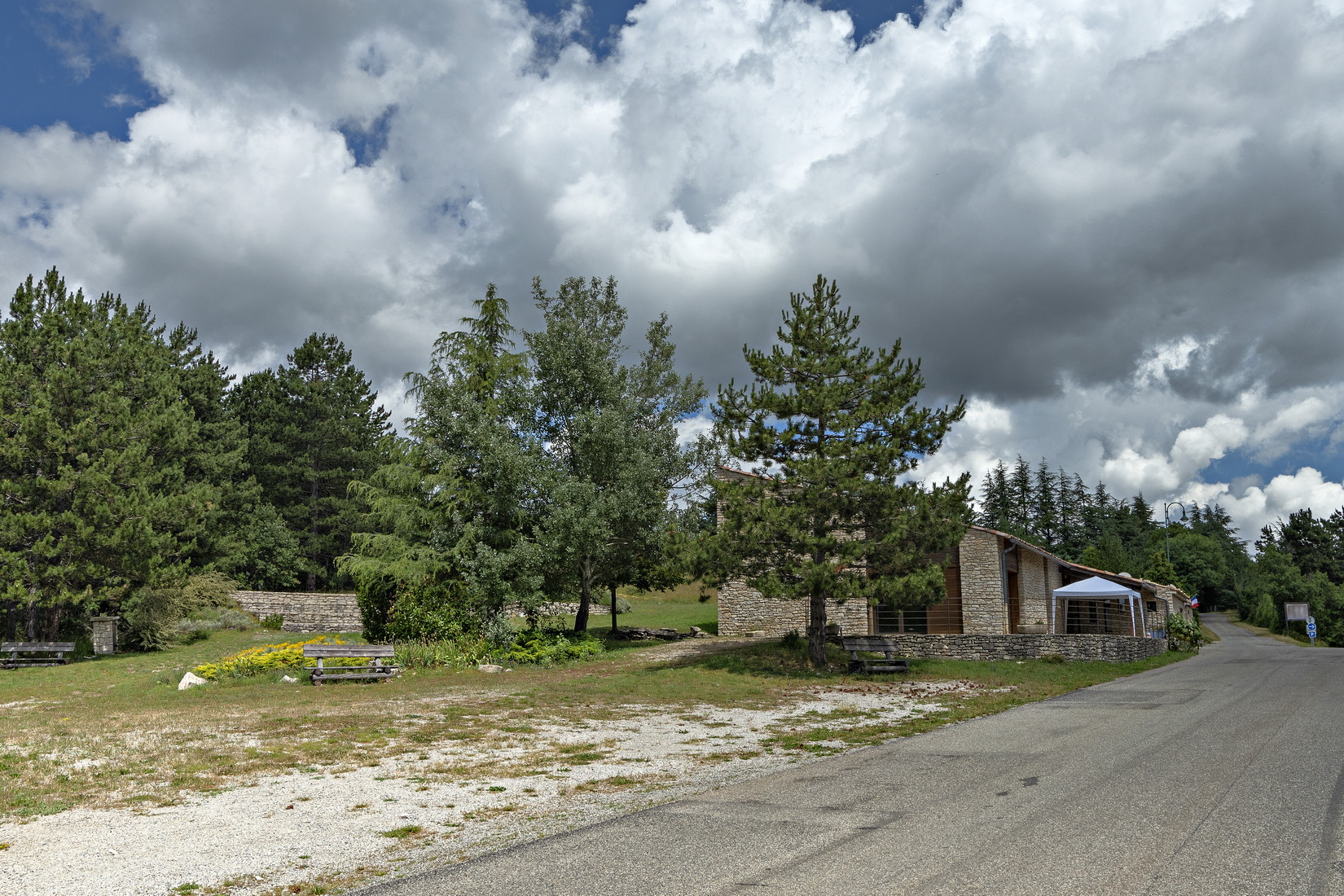
The Church of Saint-Jean-Baptiste: A rustic church dating from 1726. The key is left on the door for visitors.
The ancient theater behind the town hall.
Ferme des Graves, as celebrated as Giono’s mill, where the writer kept his beehives (les ruchers de Giono), also belonged to the writer and is now privately owned. Purchased by Jean Giono and his friends in 1935 to breathe life back into the deserted village, the well-preserved building was listed as a historic monument in 1996.
The Communal School at the hamlet of Les Sartrons, now closed, dates from the early 20th century. It was featured in Giono’s 1960 film Crésus.

outdoor
activities
Cycling routes
crafts
altitude
810 – 1430 m
area
Accueil » Authentic Haute-Provence – Redortiers
our villages :
REDORTIERS
Today, only a few ancient cobbled lanes remain visible, along with a threshing floor, terraced walls (restanques) that once supported gardens, crops, and orchards, the ruins of old bastides, the keep of a 12th-century watchtower, and several wells and cisterns that collected rainwater.
A bit farther on, you’ll find the cemetery surrounded by dry stone walls, with poignant gravestones bearing names still legible and dates of 1883 and 1918.
Near the cemetery, a barely traced zigzag path leads to the Fontaine de l’Oiseau—the old village washhouse, which still flows with water.
Located in the Vallon de la Croix, this beautifully restored washhouse is roofed with lauzes (stone slabs), like the local shepherds’ huts.
Redortiers is renowned as a significant site of the Resistance. A Chemin de la Résistance (Resistance Trail) marker stands here. (See the book: Les chemins de la liberté sur les pas des résistants de Haute-Provence, 2004.)
Like many surrounding villages, Vieux Redortiers emptied of residents around 1920. A young bank clerk from Manosque named Jean Giono fell in love with these abandoned villages slowly surrendering to nature during his walks through the region. He drew inspiration from Redortiers’ story (which he renamed “Aubignane”) for his novel Regain (published in English as Second Harvest). Between 1935 and 1939, the now-famous Giono and his friend Lucien Jacques hosted the Rencontres du Contadour—gatherings of an intellectual circle captivated by the beauty of the place—at the Ferme des Graves.
Giono would go on to make a film with Fernandel called Crésus.
Marcel Pagnol adapted Giono’s novel Regain into a film in 1937.
The Church of Saint-Jean-Baptiste: A rustic church dating from 1726. The key is left on the door for visitors.
The ancient theater behind the town hall.
Ferme des Graves, as celebrated as Giono’s mill, where the writer kept his beehives (les ruchers de Giono), also belonged to the writer and is now privately owned. Purchased by Jean Giono and his friends in 1935 to breathe life back into the deserted village, the well-preserved building was listed as a historic monument in 1996.
The Communal School at the hamlet of Les Sartrons, now closed, dates from the early 20th century. It was featured in Giono’s 1960 film Crésus.
what to see
De nos jours seules quelques anciennes ruelles caladées, sont encore visibles, une aire de battage, des murs de restanques qui autrefois abritaient jardins, des cultures ou des vergers, les vestiges d’anciennes bastides, le donjon de la tour de guet du château du XIIeme, quelques puits ou citernes servant à capter les eaux de pluie.
Un peu plus loin, vous pourrez observer le cimetière entouré de pierres sèches, quelques stèles émouvantes avec les noms encore visibles datés de 1883 et 1918.
Près du cimetière il y a un chemin en lacets à peine tracé qui conduit à la fontaine de l’Oiseau, c’est le vieux lavoir du village qui est toujours alimenté en eau.
Situé dans le vallon de la Croix. Ce lavoir a été magnifiquement restauré.
Comme les bergeries d’ici, elle est couverte de lauzes.
Redortiers est connu pour son haut lieu de la Résistance. Un panneau Chemin de la Résistance y est implanté. « Livre : Les chemins de la liberté sur les pas des résistants de Haute-Provence, 2004 ».
Comme de nombreux villages alentours, le vieux Redortiers se vida de ses habitants vers les années 1920. Un jeune employé de banque manosquin, Jean Giono, lors de ses balades dans la région, tomba amoureux de ces villages qui retournaient à la nature. Il s’inspira de l’histoire de Redortiers (qu’il nomma « Aubignane ») pour en faire un roman, Regain. Entre 1935 et 1939 eurent lieu, autour de Jean Giono, devenu célèbre, et Lucien Jacques, les rencontres du Contadour, un cercle intellectuel, fascinés par la beauté des lieux, dans la ferme des Graves.
Jean Giono réalisera un film avec Fernandel, appelé Crésus.
Marcel Pagnol réalisera un film « Regain » inspiré du roman de Jean Giono en 1937.
Ce qu’il y a à visiter :
L’église Saint Jean Baptiste, qui elle est de construction rustique datant de 1726.
Vous trouverez la clef sur la porte pour la visiter.
Le théâtre antique situé derrière la mairie.
La ferme des Graves (tout aussi connu que le « Moulin de Giono » où Giono y possédait des ruches, les ruchers de Giono) a également appartenu à l’écrivain, elle est aujourd’hui privée. Achetée par Jean Giono et ses amis en 1935, pour redonner vie au village déserté. Le bâtiment bien conservé a été inscrit au titre des monuments historiques en 1996.
Au hameau des Sartrons, l’école communale, actuellement hors-service, date du début XXe siècle. Evoquée dans le film de Jean Giono, Crésus en 1960.
