
our villages :
REDORTIERS

Redortiers takes its name from redorte, which in Provençal Occitan refers to flexible-branched shrubs once used to bind bundles of firewood.
During the era of the Lord of Redortiers, peasants lived off their livestock and wood was freely available for use.
The village prospered before the Revolution, reaching a population of 500 in the 17th century.
But after the Revolution, everything changed. Residents lost access to their land and faced heavy taxes from the new landowners. Ruined by legal battles, they watched as the inn closed and the church collapsed. The decline was inexorable.
By 1880, the village had dwindled to a simple hamlet and was eventually abandoned altogether.
This is the story Jean Giono would later tell in Regain (Second Harvest), his novel about a dying Haute-Provence village he called Aubignane.
Redortiers is also a place where dry stone masonry reigns supreme.
Arriving in this lovely village, you’ll be captivated by the surrounding landscape.
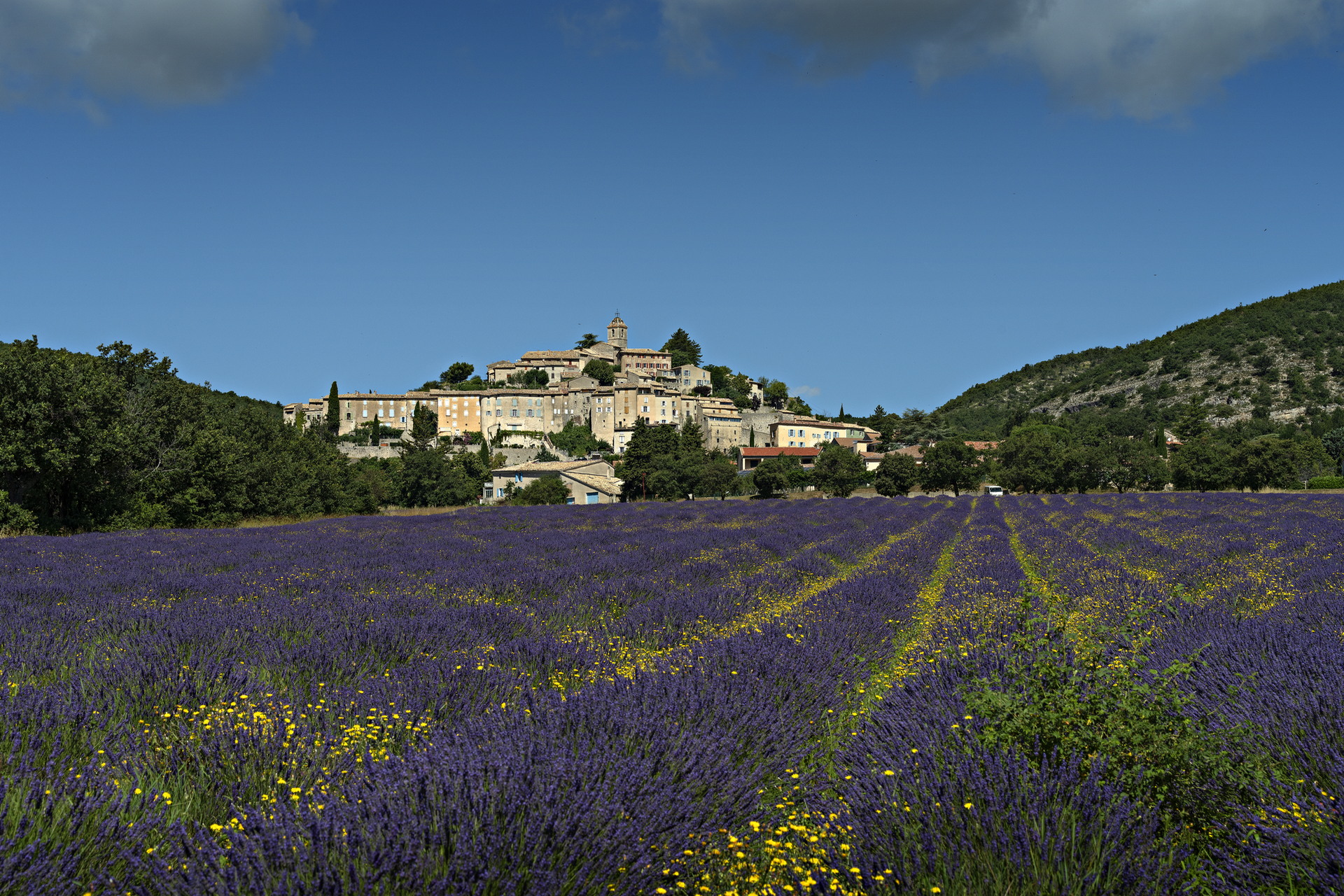
Situated between Mont Ventoux (the Albion plateau) and the Montagne de Lure, endless fields of lavender and clary sage stretch before you, framed by beautiful mountains in the distance.
A breath of pure mountain air amid stunning natural beauty awaits you in Redortiers!
The original village, known as Vieux Redortiers (Old Redortiers), now lies in ruins.
The path leading there reveals nature reclaiming its territory.
A narrow trail unfolds with incredible viewpoints, dry stone walls, and cobblestone streets (calades) restored by young volunteers in 2005.


what to see
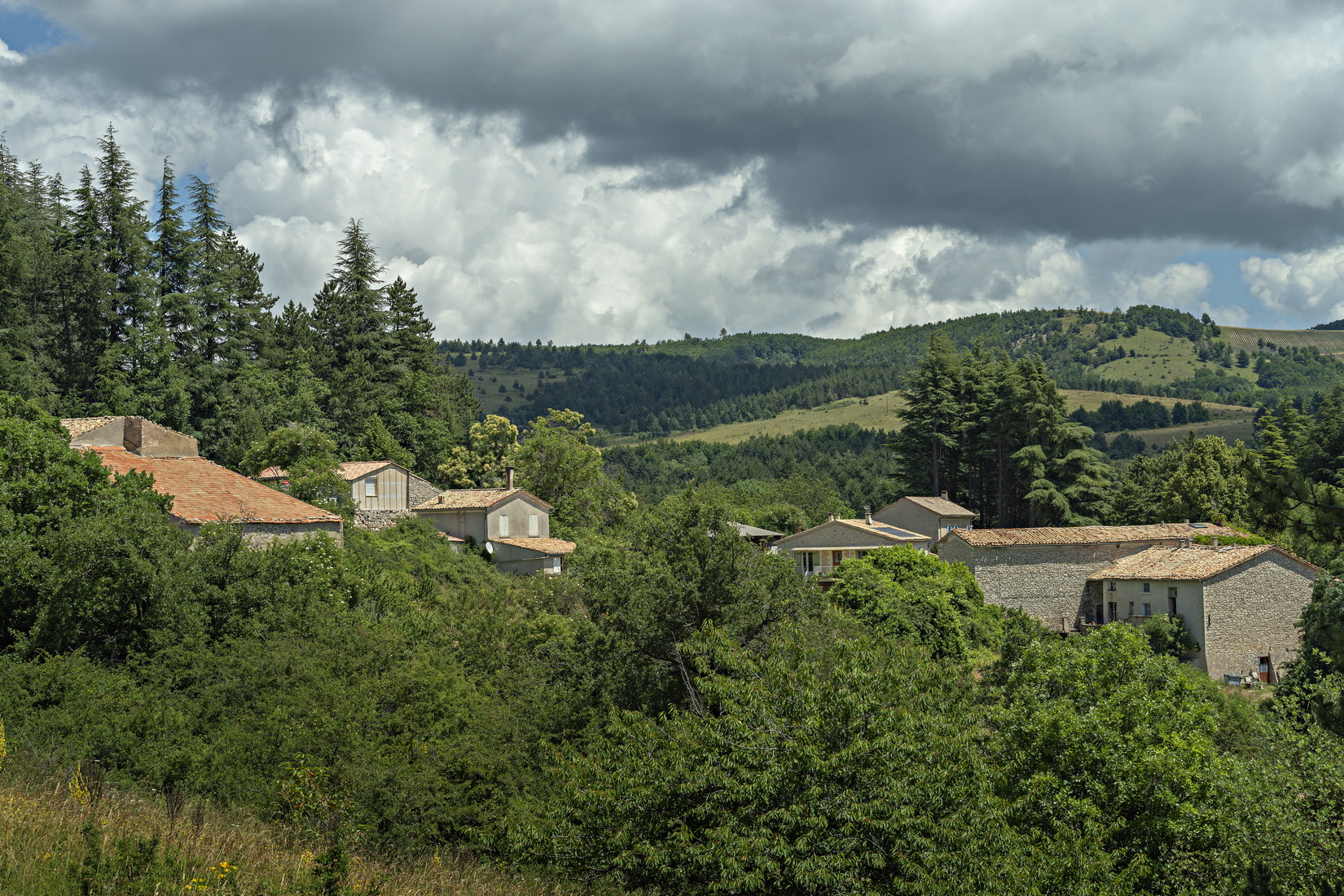
Today, only a few ancient cobbled lanes remain visible, along with a threshing floor, terraced walls (restanques) that once supported gardens, crops, and orchards, the ruins of old bastides, the keep of a 12th-century watchtower, and several wells and cisterns that collected rainwater.
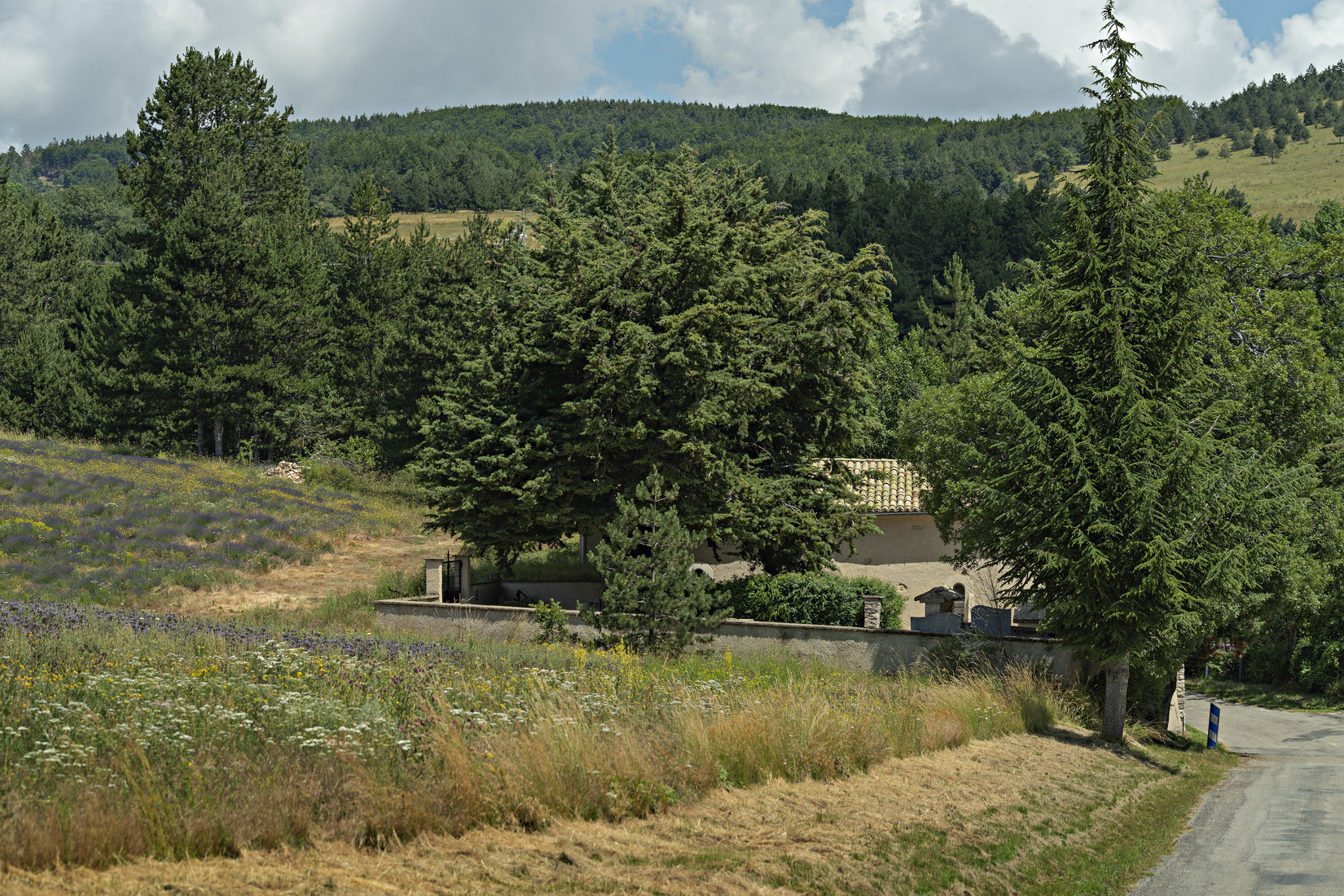
A bit farther on, you’ll find the cemetery surrounded by dry stone walls, with poignant gravestones bearing names still legible and dates of 1883 and 1918.
Near the cemetery, a barely traced zigzag path leads to the Fontaine de l’Oiseau—the old village washhouse, which still flows with water.
Located in the Vallon de la Croix, this beautifully restored washhouse is roofed with lauzes (stone slabs), like the local shepherds’ huts.
Redortiers is renowned as a significant site of the Resistance. A Chemin de la Résistance (Resistance Trail) marker stands here. (See the book: Les chemins de la liberté sur les pas des résistants de Haute-Provence, 2004.)
Like many surrounding villages, Vieux Redortiers emptied of residents around 1920. A young bank clerk from Manosque named Jean Giono fell in love with these abandoned villages slowly surrendering to nature during his walks through the region. He drew inspiration from Redortiers’ story (which he renamed “Aubignane”) for his novel Regain (published in English as Second Harvest). Between 1935 and 1939, the now-famous Giono and his friend Lucien Jacques hosted the Rencontres du Contadour—gatherings of an intellectual circle captivated by the beauty of the place—at the Ferme des Graves.
The film Crésus (1960) with Fernandel – based on o story by Jean Giono – was later produced, with scenes shot in the region..
Marcel Pagnol adapted Giono’s novel Regain into a film in 1937.
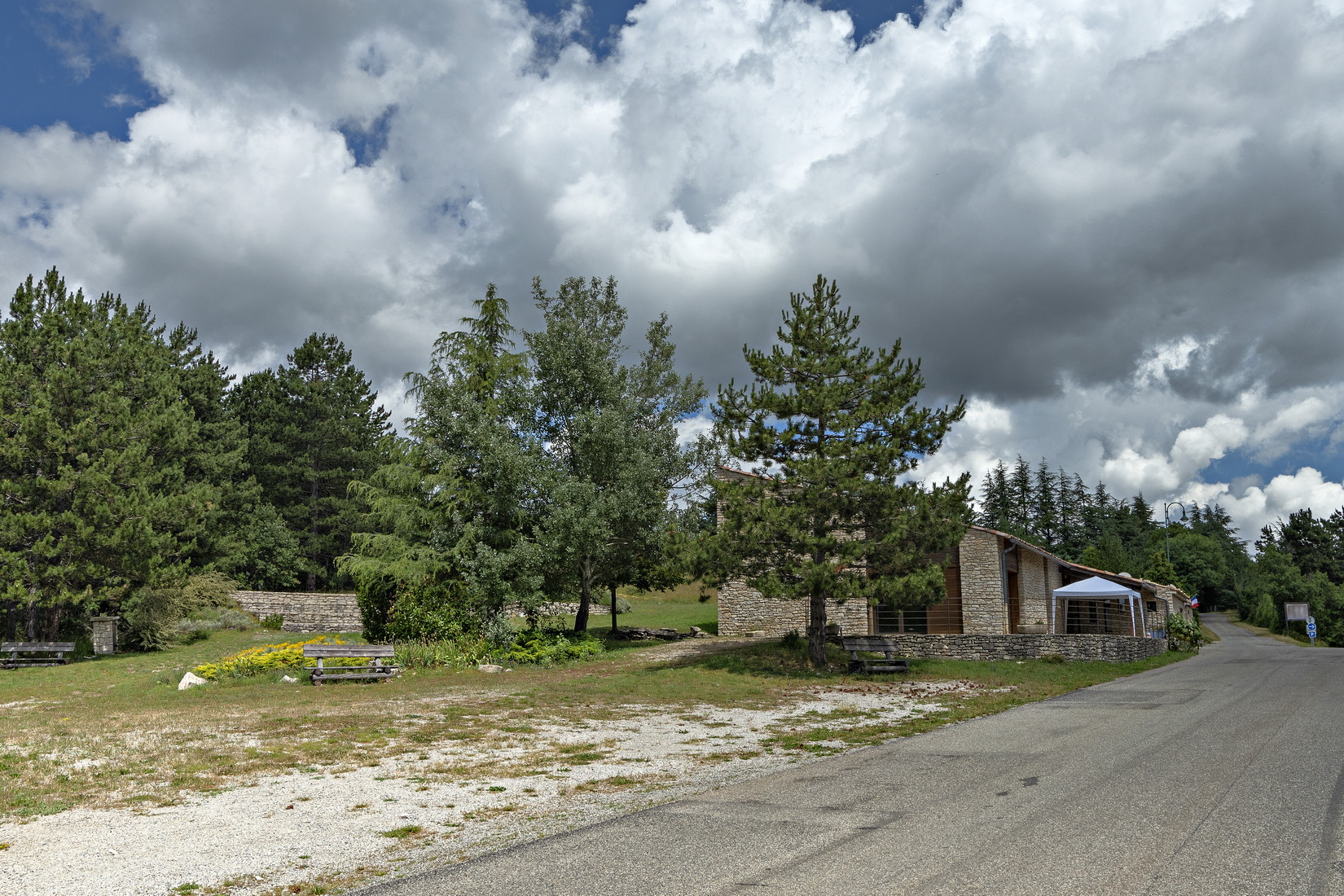
The Church of Saint-Jean-Baptiste: A rustic church dating from 1726. The key is left on the door for visitors.
The ancient theater behind the town hall.
Ferme des Graves, as celebrated as Giono’s mill, where the writer kept his beehives (known as les ruchers de Giono, or Giono’s beehives), also belonged to the writer and is now privately owned. Purchased by Jean Giono and his friends in 1935 to breathe life back into the deserted village, the well-preserved building was listed as a historic monument in 1996.
The Communal School at the hamlet of Les Sartrons, now closed, dates from the early 20th century. It was featured in Giono’s 1960 film Crésus.

outdoor
activities
Cycling routes
crafts
altitude
810 – 1430 m
area
Accueil » Authentic Haute-Provence – Redortiers
our villages :
REDORTIERS
Redortiers takes its name from redorte, which in Provençal Occitan refers to flexible-branched shrubs once used to bind bundles of firewood.
During the era of the Lord of Redortiers, peasants lived off their livestock and wood was freely available for use.
The village prospered before the Revolution, reaching a population of 500 in the 17th century.
But after the Revolution, everything changed. Residents lost access to their land and faced heavy taxes from the new landowners. Ruined by legal battles, they watched as the inn closed and the church collapsed. The decline was inexorable.
By 1880, the village had dwindled to a simple hamlet and was eventually abandoned altogether.
This is the story Jean Giono would later tell in Regain (Second Harvest), his novel about a dying Haute-Provence village he called Aubignane.
Redortiers is also a place where dry stone masonry reigns supreme.
Arriving in this lovely village, you’ll be captivated by the surrounding landscape.
Situated between Mont Ventoux (the Albion plateau) and the Montagne de Lure, endless fields of lavender and clary sage stretch before you, framed by beautiful mountains in the distance.
A breath of pure mountain air amid stunning natural beauty awaits you in Redortiers!
The original village, known as Vieux Redortiers (Old Redortiers), now lies in ruins.
The path leading there reveals nature reclaiming its territory.
A narrow trail unfolds with incredible viewpoints, dry stone walls, and cobblestone streets (calades) restored by young volunteers in 2005.
what to see
Today, only a few ancient cobbled lanes remain visible, along with a threshing floor, terraced walls (restanques) that once supported gardens, crops, and orchards, the ruins of old bastides, the keep of a 12th-century watchtower, and several wells and cisterns that collected rainwater.
A bit farther on, you’ll find the cemetery surrounded by dry stone walls, with poignant gravestones bearing names still legible and dates of 1883 and 1918.
Near the cemetery, a barely traced zigzag path leads to the Fontaine de l’Oiseau—the old village washhouse, which still flows with water.
Located in the Vallon de la Croix, this beautifully restored washhouse is roofed with lauzes (stone slabs), like the local shepherds’ huts.
Redortiers is renowned as a significant site of the Resistance. A Chemin de la Résistance (Resistance Trail) marker stands here. (See the book: Les chemins de la liberté sur les pas des résistants de Haute-Provence, 2004.)
Like many surrounding villages, Vieux Redortiers emptied of residents around 1920. A young bank clerk from Manosque named Jean Giono fell in love with these abandoned villages slowly surrendering to nature during his walks through the region. He drew inspiration from Redortiers’ story (which he renamed “Aubignane”) for his novel Regain (published in English as Second Harvest). Between 1935 and 1939, the now-famous Giono and his friend Lucien Jacques hosted the Rencontres du Contadour—gatherings of an intellectual circle captivated by the beauty of the place—at the Ferme des Graves.
The film Crésus (1960) with Fernandel – based on o story by Jean Giono – was later produced, with scenes shot in the region..
Marcel Pagnol adapted Giono’s novel Regain into a film in 1937.
The Church of Saint-Jean-Baptiste: A rustic church dating from 1726. The key is left on the door for visitors.
The ancient theater behind the town hall.
Ferme des Graves, as celebrated as Giono’s mill, where the writer kept his beehives (known as les ruchers de Giono, or Giono’s beehives), also belonged to the writer and is now privately owned. Purchased by Jean Giono and his friends in 1935 to breathe life back into the deserted village, the well-preserved building was listed as a historic monument in 1996.
The Communal School at the hamlet of Les Sartrons, now closed, dates from the early 20th century. It was featured in Giono’s 1960 film Crésus.
